100 Calorie Snack Board, Build One That Satisfies
Build a snack board under 100 calories that actually keeps you full. Use simple “protein + fiber + volume” combos, exact portions, and quick logging tricks to stop mindless snacking while staying in a calorie deficit.
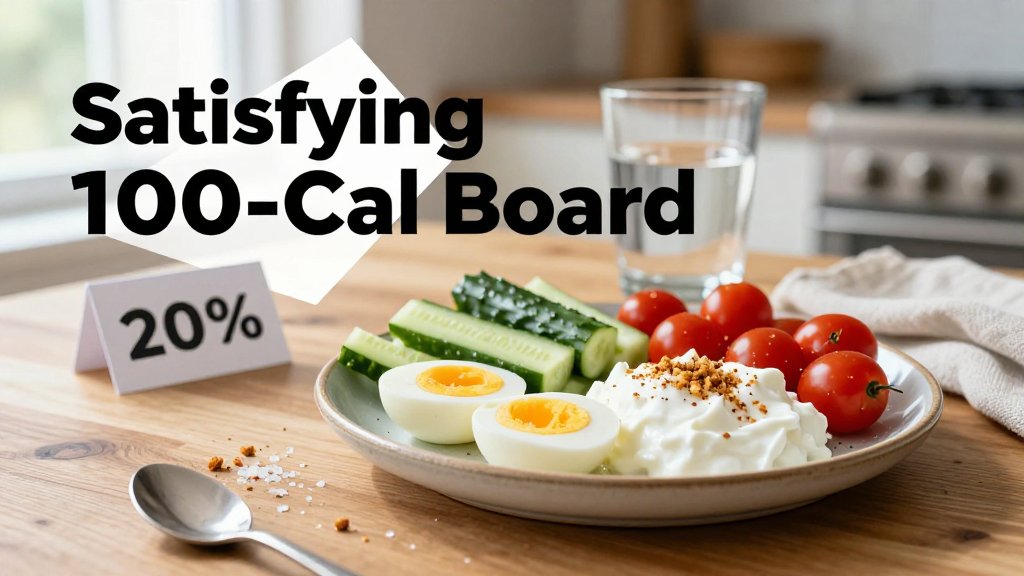
A snack board can be both fun and disciplined, which matters when you want something satisfying without turning a quick bite into a calorie spiral. In this guide, you will learn how to build a 100 calorie snack board that feels like a treat and still supports your goals. We will focus on fullness triggers like protein, fiber, and high-water foods, plus simple mix-and-match combos that actually taste good. Expect specific portions that are easy to measure and quick to log in CalMeal.
What makes a 100 calorie snack board satisfying
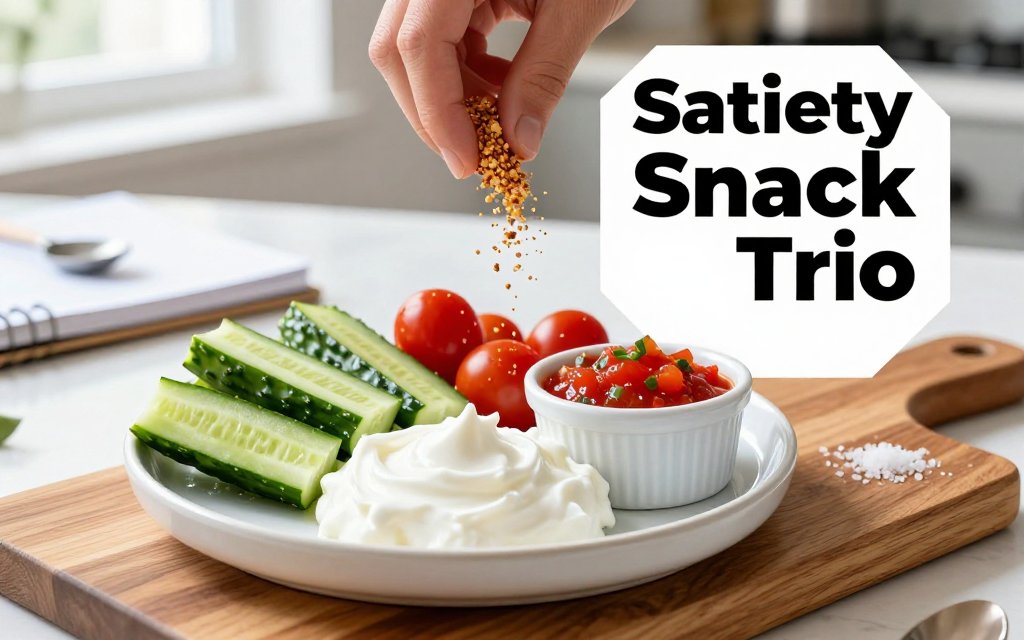
A 100 calorie snack board works because it turns a tiny calorie budget into a real eating experience. Instead of grabbing one food straight from the bag, you build a small, intentional plate with a few different textures and flavors. That matters for cravings, because satisfaction is not only about calories, it is also about how long you spend eating, how “complete” the snack feels, and whether you get hungry again 20 minutes later. A good snack board gives you more bites, more chew time, and a clearer stopping point. You finish the plate, you log it, and you move on with your day.
The secret is the trio of protein, fiber, and high-volume foods (usually watery produce). Protein helps blunt the “I need more” feeling after you eat, and many nutrition researchers note it tends to be the most filling macronutrient compared with carbs or fat, calorie for calorie, which is why it is so useful when calories are tight. You can see that idea summarized in protein and satiety evidence. Fiber and water add bulk without many calories, so your snack is physically larger. Put together, you get less hunger rebound and fewer pantry laps later.
The simple formula: protein, fiber, and volume
Here is the quick mental formula that makes snack boards feel “worth it” at about 100 calories: aim for 1 anchor, 1 high-volume produce, and 1 flavor booster. The anchor is your protein or dairy that steadies appetite (think nonfat Greek yogurt, cottage cheese, deli turkey, edamame, or one hard-boiled egg). The high-volume produce is a big pile of something crunchy or juicy that takes time to eat (cucumber, strawberries, sugar snap peas, cherry tomatoes, grapes). The flavor booster is the tiny add-on that makes the whole board taste intentional (everything bagel seasoning, salsa, mustard, pickles, lime, cinnamon, hot sauce). This structure keeps the snack balanced even when portions are small.
In macro terms, the anchor is doing most of the work. If you can, target about 5 to 10 g protein on a 100 calorie board, especially if you lift, run, or are eating in a calorie deficit. For example, 100 g (about 2/3 cup) nonfat plain Greek yogurt is often around 60 calories and roughly 10 g protein, then you can add 100 g strawberries for about 30 calories and finish with cinnamon or a zero-calorie sweetener. Another easy combo is 1 hard-boiled egg (about 70 to 80 calories) plus a heaping cup of cucumber slices (about 10 to 15 calories) plus mustard or hot sauce. You get a bigger plate and a steadier appetite than you would from one snack food alone.
If your snack hits 100 calories in three bites, it will not feel like a snack. Add protein plus a big produce pile, then a bold flavor, so you eat slower and stay satisfied longer.
Snack boards also help with portion control because they force a “plate moment.” You stop, you measure, and you build the board with boundaries. A small ramekin for dip, a handful of berries you actually count, and a protein portion you can repeat tomorrow, that routine is how mindless snacking turns into consistent tracking. It is also easier to adjust based on your goal. If fat loss is the priority, keep the flavor booster punchy but light (pickles, salsa, lemon, vinegar, spices). If performance is the priority, you can still keep calories near 100, but choose an anchor that supports your macro targets (low-fat dairy, lean meat, soy).
A common mistake that leads to second snacking
The most common 100 calorie mistake is spending the whole budget on crunchy carbs, or on fruit alone. It looks like: 10 to 12 pretzel twists, a small handful of crackers, a mini bag of chips, or even a banana by itself. You hit 100 calories fast, finish in a minute, and your stomach and brain barely register that you ate. Then comes the “second snack” that turns into 250 to 400 calories without feeling any more satisfying. The fix is simple: keep at least 5 to 10 g protein when possible, or if protein is not available, add bulky produce so the snack takes longer to eat. Pair crackers with turkey slices, or put the fruit next to yogurt or cottage cheese.
To make this easy on busy days, pick two “default boards” you can repeat without thinking. Example A: 2 oz sliced deli turkey (about 60 calories) plus a cup of cherry tomatoes (about 25 to 30 calories) plus pickle spears and black pepper. Example B: 1/2 cup low-fat cottage cheese (often 80 to 100 calories, depending on brand) plus a big pile of cucumber and radish slices plus everything bagel seasoning. If you are on appetite-affecting medications or just find hunger signals unpredictable, the same formula still helps, and it becomes even more important to track protein and fiber consistently. CalMeal readers on GLP-1s may also like GLP-1 protein and fiber tracking. For personal medical questions, check with your clinician.
Snack board under 100 calories, portions that work
A snack board under 100 calories is all about portions, not perfection. Most people go over budget because “small handful” and “a few crackers” are hard to repeat. The fix is choosing foods you can measure quickly (grams, cups, or countable pieces) and then logging what you actually used. Brands vary a lot, especially with deli meats, cheese, yogurt cups, flavored rice cakes, and anything labeled “light.” Use the CalMeal app to confirm the exact calories for the brand in your kitchen, then save it as a favorite so your next snack board takes 30 seconds to log.
Use this snack calories list as building blocks
Think of the table below as your “about 100 calories” anchors. You can use one anchor as your whole snack, or split an anchor into two smaller piles so you can still build a 3-item board. For busy professionals, pick anchors that travel well: sealed cups, individually wrapped sticks, or foods you can weigh once and pre-portion for the week. If you have a food scale, grams are the most repeatable. If you do not, choose items with easy measuring tools (a 1/2 cup scoop, tablespoons for dips, or countable pieces like grapes and pretzel sticks).
| Food | Portion | Calories |
|---|---|---|
| Greek yogurt 0% | 150 g | 90 |
| Cottage cheese 1% | 1/2 cup | 90 |
| Turkey slices | 3 oz | 90 |
| Edamame shelled | 1/2 cup | 100 |
| Air-popped popcorn | 3 cups | 90 |
| Dark chocolate 70% | 20 g | 110 |
To make the board feel bigger without adding many calories, keep the anchor portion modest and add volume from produce. Example: use 75 g of nonfat Greek yogurt (about half the table portion) as a dip, then pile on cucumber rounds and cherry tomatoes. You still get a “board” experience, but your calories stay predictable. If you want a high-protein snack under 100 calories, protein-lean anchors work best, like turkey slices, nonfat Greek yogurt, or low-fat cottage cheese. Research consistently finds that higher protein intakes and preloads tend to increase fullness compared to lower protein options, which is why protein often feels more satisfying calorie-for-calorie (see protein boosts fullness).
For low-calorie snacks that fill you up, you are usually chasing water and fiber volume. Cucumbers, bell pepper strips, strawberries, grapefruit segments, celery, and sugar snap peas can take up a lot of space on the board for very few calories. Pair that volume with a protein-lean dip or bite, and you get the best of both worlds: physical fullness plus staying power. One practical combo under 100 calories is 2 oz turkey (check your brand, it is often 50-70 calories) with mustard, plus 1 to 2 cups of sliced cucumber. Another is 1/4 cup low-fat cottage cheese with a big pile of cherry tomatoes and a sprinkle of everything bagel seasoning.
How to pick your 3 items without overthinking
Use this shortcut: pick 1 protein, pick 1 produce, then pick either crunch or sweet. If you are short on calories, add berries, extra cucumbers, or more tomatoes first, they give you the biggest visual and volume upgrade for the smallest calorie cost. If you are over 100, reduce the calorie-dense “extras” first, like nuts, crackers, chocolate, cheese, or hummus. For example, swapping 20 g chocolate (about 110) for 10 g chocolate (about 55) often fixes the whole board without touching your protein. Want more “fullness” techniques that still fit calorie counting? Try these energy density eating hacks and log your most repeatable combos in CalMeal as saved meals.
If your board is creeping over budget, keep the protein the same, then shrink the calorie-dense add-ons. A few grams of nuts or cheese adds up fast, while cucumbers and berries barely move the needle.
Two quick under-100 examples you can build today: (1) 75 g nonfat Greek yogurt (about 45 calories) plus 1 cup strawberries (about 50) plus cinnamon, a clean sweet board right around 95. (2) 1/4 cup low-fat cottage cheese (often 45-60) plus 1 cup sliced cucumbers (about 15-20) plus 8 pretzel sticks (often 30-40), a crunchy board that lands close to 100 depending on brand. The point is not hitting an exact number every time, it is creating a repeatable template you can adjust. Confirm the brands you use once in CalMeal, then keep those portions on autopilot.
Easy snack prep for weight loss, sweet and savory boards
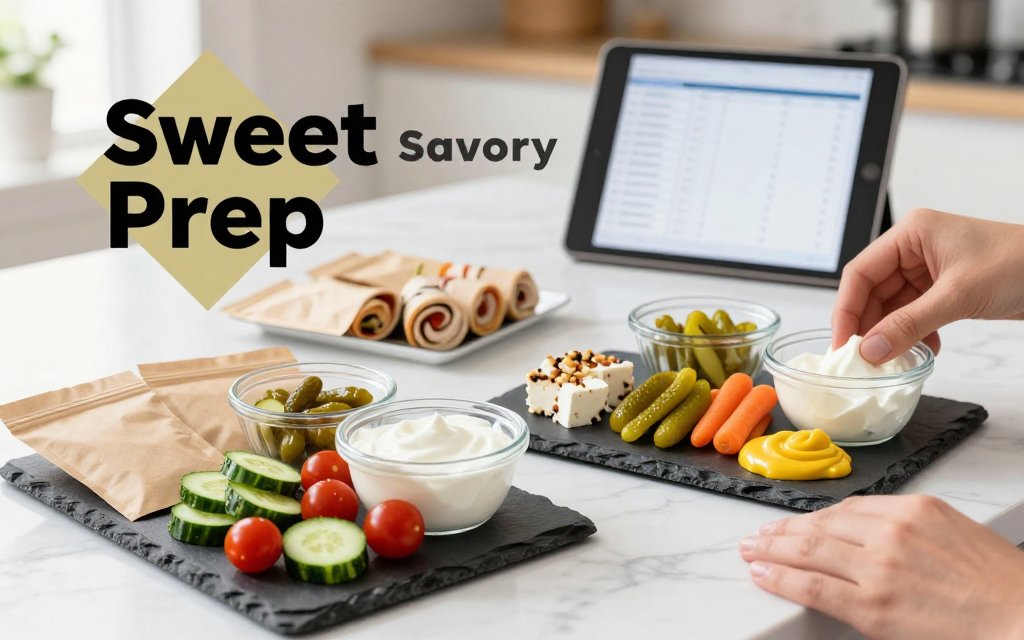
Treat your 100 calorie snack like a tiny, intentional “board,” not a handful you eat while standing at the fridge. The goal is simple: you want volume (crunchy produce), protein (to help it stick with you), and a strong flavor “hook” (salty, tangy, spicy, or sweet) so 100 calories actually feels finished. The easiest weight loss prep trick is to pick two “default boards” for the week, one savory and one sweet, then repeat them. Pre-portion the components on Sunday into snack-size containers or baggies, and log the default boards once in your tracker so weeknight you can just tap and eat, instead of negotiating with the pantry.
Savory boards that feel like real food
Savory boards work best when you pair a “protein anchor” with a high-water, high-fiber crunch. That combo gives your brain the meal-like signals it wants: chew time, salt or acid, and something that feels substantial. If sodium is a concern for you, keep the same board shape but swap in lower-sodium versions of deli meat, pickles, miso, and seasoning blends. If fiber is your focus, you can nearly always add more non-starchy veggies without blowing the calorie budget. Think cucumbers, cherry tomatoes, radishes, sugar snap peas, bell pepper strips, shredded cabbage, or a heap of salad greens you can grab with a fork.
To make savory boards automatic, build a small “grab box” in your fridge: pre-washed crunch veggies in one bin, proteins in another, and flavor boosters in a third. Flavor boosters are what stop a 100 calorie snack from feeling like diet food, and they barely cost calories when you portion them. Good options include mustard, salsa, vinegar, hot sauce, lemon wedges, chopped herbs, and everything bagel seasoning. For sodium-sensitive swaps, prioritize vinegar, citrus, pepper, and fresh herbs over brines and cured meats. For more staying power, aim for at least one board per day that includes a clear protein source like yogurt, cottage cheese, tuna, or turkey.
Build boards once, then repeat them. Pre-portion proteins and crunch veggies into two or three “default” combos, log them before you snack, and you will cut decision fatigue while keeping calories predictable and satisfying.
Sweet boards that do not spike cravings
Sweet boards are all about planning the sweetness so it ends the snack, instead of starting a scavenger hunt for more. The pattern that tends to feel calm and controlled is fruit plus a creamy element (yogurt, whipped topping, or a measured pudding) plus a “finish” flavor like cinnamon or cocoa. If you can include even a small protein piece, it often feels more satisfying than fruit alone. Research on higher-protein snacks, including yogurt, has found improvements in appetite control and reduced hunger compared with more energy-dense snack options, which is why a yogurt base can be a smart sweet-board default for many people. (pmc.ncbi.nlm.nih.gov)
Try these sweet mini-boards in the same “three-part” format. Dessert berries: 1 cup strawberries (about 50) plus 2 tablespoons light whipped topping (about 15 to 20) plus 1 tablespoon crushed graham cracker (about 25 to 30). Apple and PB powder dip: 1/2 medium apple, thin-sliced (about 45 to 55) plus 1 tablespoon PB powder mixed with water and cinnamon (about 30) plus 1 tablespoon nonfat Greek yogurt stirred in (about 10). Cocoa yogurt board: 1/3 cup plain nonfat Greek yogurt (about 40) plus 1 teaspoon cocoa powder and sweetener (about 5) plus 1/2 cup strawberries (about 25) plus 1 teaspoon mini chocolate chips (about 20 to 25). If you want a “protein pudding shot,” mix 1/2 scoop whey (about 50 to 60) with a few spoonfuls of yogurt and cocoa to land near 100. For a counterintuitive win, plan a tiny chocolate portion, like a weighed 8 to 10 g square paired with 1/2 cup frozen grapes, log it first, and it can reduce later grazing because you already know it fits. For more detail on how a higher-protein yogurt snack can affect appetite, skim the high-protein snack study. (pmc.ncbi.nlm.nih.gov)
Make this even easier by setting up “board rules” you repeat all week: pick one sweet board for afternoon cravings, and one savory board for late-night snacking. Keep the portions consistent so your brain learns what 100 calories looks like. If you use CalMeal or any calorie tracker, save each default board as a custom meal so logging takes seconds. If you are managing a health condition, blood sugar concerns, or sodium restrictions, check with your doctor or a registered dietitian for personalized targets. The win here is not perfection, it is reducing mindless snacking by making your next choice the easy one.
How to stop mindless snacking and log accurately
A 100 calorie snack board only works if it stays a board, not a snack plate you keep upgrading. The easiest way to prevent that is to decide your portion before you start eating. Build it, close the kitchen (or put the bag back), and treat it like a mini meal with a beginning and an end. If you are tracking macros, this also keeps your day from turning into a bunch of tiny “invisible” entries that never get logged. If you have any medical or nutrition concerns (including blood sugar issues), it is always smart to check in with your doctor or a registered dietitian for personalized guidance.
Set rules that make snacking boring in a good way
Use one repeatable routine so snacking feels intentional instead of automatic: drink a full glass of water first, put the food on a plate (not a napkin or straight from the bag), sit down, and set a 10 minute timer. The goal is not to be strict, it is to remove “hand to bag” calories and give your hunger time to settle. If you want a simple portion control structure, think “one protein or crunch anchor plus one produce anchor.” Example: 3/4 cup strawberries (about 35 calories) plus 1 light string cheese (about 50 to 60 calories) gets you close to 100 with minimal decision fatigue.
If you train, use a preplanned adjuster so you do not accidentally underfuel and rebound snack later. For a planned pre or post workout snack, add 50 to 100 calories of protein to your board and log it on purpose. Easy add-ons include about 1/2 scoop whey mixed with water (often 50 to 70 calories, check your label), 2 to 3 ounces of deli turkey (roughly 60 to 90 calories depending on the brand), or 2/3 cup nonfat Greek yogurt (often 80 to 100 calories). Then keep the rest of the board produce-forward so you still feel like you are eating “a lot” for the calories.
FAQ: 100 calorie snack boards and calorie counting
Accuracy does not have to mean perfection. If you are consistent, you will get the benefit of tracking without turning snack time into math class. Two beginner-friendly strategies help most people immediately: repeat the same 2 to 3 snack boards all week (so you can save them as a “recent” or “favorite” log), and use package and database entries that match how you actually eat (for example, “1 light cheese stick” or “10 almonds” instead of trying to estimate grams every time). For macro trackers, aim to keep your snack board within a tight protein range, then let carbs and fats flex a bit based on your daily targets.
Are “100 calorie snacks” actually 100 calories, or is there a range?
Treat 100 calories as a target, not a magic number. A practical range is about 90 to 110 calories, especially if you are eyeballing portions. Even packaged labels can be rounded by regulation, which is why two “100 calorie” items may not be identical. In the US, calorie values on the Nutrition Facts label are rounded (for example, to the nearest 5 calories up to 50, and to the nearest 10 above 50). That rounding is described in the FDA nutrition labeling regulation. If your board lands at 115 once in a while, do not panic, just log it honestly and move on. (law.cornell.edu)
What are the best high protein snacks under 100 calories?
Go for compact proteins that are easy to portion and log. High protein picks under 100 calories include: 1/2 cup nonfat cottage cheese (often around 80 to 90 calories, about 12 to 14 g protein), 3/4 cup nonfat Greek yogurt (often 80 to 100 calories, about 14 to 17 g protein), 3 to 4 egg whites (roughly 50 to 70 calories, about 10 to 14 g protein), or 2 ounces sliced turkey or chicken breast (often 60 to 90 calories, about 10 to 18 g protein). Pair with cucumber rounds or berries to keep it snack-board satisfying without adding many calories.
How do I log a snack board fast without weighing everything?
Use repeatable portions and a shortcut workflow. Start with items that come in countable units (1 cheese stick, 10 almonds, 1 mini rice cake, 2 tablespoons hummus). For produce, log by common measures you can picture quickly (1 cup grapes, 1 medium apple, 3/4 cup blueberries). If you use a tracker like CalMeal, take one photo before you eat and log from the image immediately, or right after if you are busy, using your recent items. When you are unsure, choose a single database entry and stick with it consistently, since food energy values can vary across data sources like USDA FoodData Central. (fdc.nal.usda.gov)
Ready to make snack decisions simpler, faster, and more accurate? Start tracking your nutrition today, download CalMeal for free, and take the guesswork out of calorie counting with AI-powered food recognition. Log your 100 calorie snack board in seconds, stay consistent, and see progress add up over time. Get CalMeal on iOS or Android and start now.
Start Tracking Your Nutrition Today
Download CalMeal for free and take the guesswork out of calorie counting with AI-powered food recognition.

