Calorie Banking for Weekends: Set Your Weekly Budget
Calorie banking is a simple way to plan for weekends without feeling like you “blew it.” You set a weekly calorie budget, intentionally eat a bit lighter on some weekdays, then spend those saved calories on restaurants, drinks, and social meals while still staying on track for fat loss.
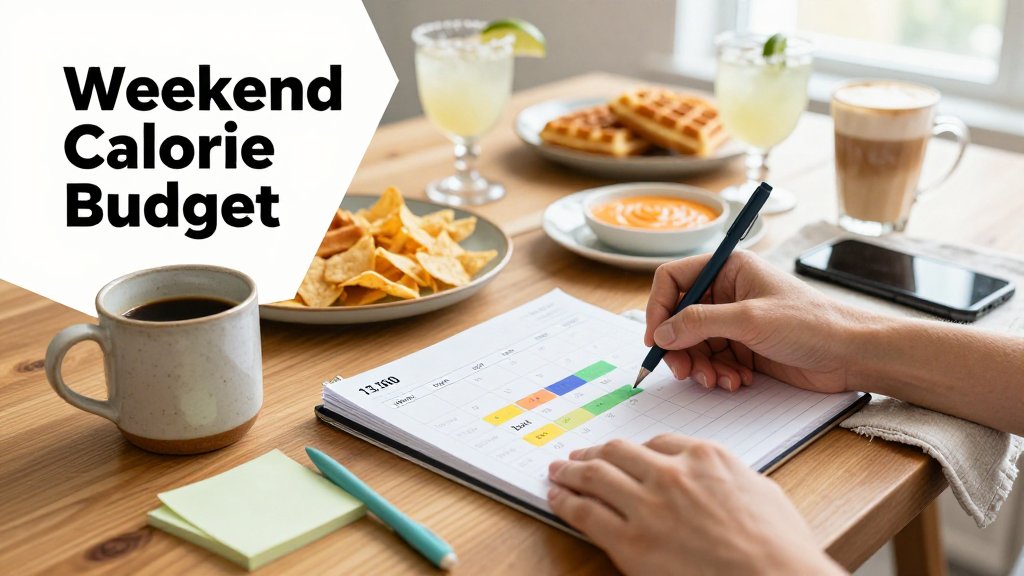
You crush it Monday through Friday, then Saturday hits and one brunch, a few drinks, and a late-night bite wipe out the progress. If that pattern feels familiar, you are not alone, and it is exactly why calorie banking can be so helpful. Your body responds to trends over time, so a weekly calorie budget can be more realistic than chasing perfection every day. In this guide, you will learn a simple method with real numbers, plus the common pitfalls that make banking backfire.
What calorie banking is and when it works

Friday happy hour and Saturday brunch can quietly blow up an otherwise solid week. Say your daily target is 1,900 calories. That is 13,300 calories for the week. If Friday turns into two margaritas (about 500 calories) plus chips and queso (about 400) on top of dinner, and Saturday brunch is chicken and waffles (about 900) plus a latte (about 200), you can end up 1,000 to 1,500 calories over plan before Sunday even starts. The frustrating part is that nothing “went wrong” with your motivation, you just had a social weekend. Calorie banking gives you a way to plan for real life by looking at your weekly average, not only a single day.
The core principle is simple: your body responds to your overall energy balance over time. A higher day does not automatically “ruin” progress, and a lower day does not automatically “fix” it. What matters is whether your week ends in a calorie deficit, maintenance, or surplus. Banking is basically budgeting: you set a weekly calorie amount based on your goal, then you decide where you want to spend more of it. For many people, weekends are the most worth it because meals out are social, memorable, and harder to estimate. The skill is shifting a small amount of calories from quieter days to louder days, while still eating enough to feel steady and in control.
Calorie banking definition in one sentence
Calorie banking means intentionally eating slightly under your daily target on selected days so you can eat more on planned higher-calorie days, while keeping your weekly average in line with your goal. In practice, “slightly under” should feel boring, not brutal. Example: if your target is 2,000 calories per day, your weekly budget is 14,000. If you bank 250 calories Monday through Thursday (eating 1,750 instead of 2,000), you save 1,000 calories. That can fund Friday happy hour appetizers or a bigger Saturday brunch without turning the whole week into a wash. The win is predictability: you are choosing the tradeoff ahead of time instead of reacting to guilt afterward.
Banking is not the same as “earning” food. Earning usually sounds like: “I will punish myself with a tiny lunch or a brutal workout so I deserve dessert.” Banking sounds like: “I am going to keep weekday meals a bit simpler so I have room for the meal I already know I want.” That difference matters because the goal is consistency, not compensation. Workouts are excellent for strength, endurance, mood, and health markers, but exercise calorie burn is easy to overestimate and hunger can rise afterward. Banking works best when weekday cuts come from low-satiety extras (like sugary drinks, mindless snacks, or second helpings), not from slashing protein, skipping meals, or trying to white-knuckle hunger all day.
Calorie banking works best when the cuts are small and planned. If you feel shaky, obsessive, or ravenous by Thursday, your bank is too aggressive. Adjust the plan, not your willpower.
Who should use it, and who should skip it
Calorie banking is a great fit for social eaters and anyone whose weekends include restaurants, family dinners, date nights, or travel. It also works well for people who like structure on weekdays and flexibility on weekends, for example meal-prepping simple breakfasts and lunches Monday through Friday, then leaving room for a restaurant dinner Saturday. Macro trackers often like banking because it encourages a smart split: keep your protein target steady all week, then let extra weekend calories come mainly from carbs and fats you enjoy (pizza night, a craft beer, or pancakes). Busy professionals also benefit because the plan reduces decision fatigue: you already know which days are “normal” and which days are “higher.”
Skipping calorie banking can be the healthier choice if you have a history of binge-restrict cycles, if smaller weekday targets make you overly hungry, or if “saving calories” turns into obsessing about food. A common red flag is banking so aggressively that you arrive at Friday depleted, then eat past fullness because your body is playing catch-up. Athletes and people with high training demands should also be cautious, since under-fueling on weekdays can harm performance and recovery even if the weekly average looks fine on paper. If you are pregnant, breastfeeding, managing blood sugar, or have any medical concerns, talk with a clinician first, and consider reading breastfeeding calorie deficit tracking for extra safety context.
A simple way to test whether banking works for you is to keep the weekday “bank” small and see how you feel. Start with 150 calories banked on three days (450 total), then plan exactly where it goes: maybe one extra cocktail on Friday (150 to 250), plus an order of fries to split on Saturday (300 to 500). Pre-log the weekend meal as best you can, then build your earlier meals around it. If you use CalMeal, set your daily target, then think in weekly totals so your choices feel like a budget instead of a judgment. This approach lines up with mainstream guidance that weight change depends on balancing calories in and out over time, as explained in NIDDK calorie balance guidance.
How to calculate your weekly calorie budget
Think of your calorie target as a weekly paycheck, not a daily allowance. Your body responds to your overall energy intake over time, so planning Monday through Sunday can make weekends feel easier without turning weekdays into a slog. If you want a sanity check on what a reasonable daily target looks like for your stats and goals, the NIH Body Weight Planner is a helpful reference tool. Once you have a daily number, the rest is just simple math plus a little strategy so you can eat more on Saturday and Sunday while still staying on budget for the week.
The simple math: daily target times seven
Start with the core formula: weekly calorie budget = daily calorie target x 7. If your target is 1,800 calories per day, your weekly budget is 1,800 x 7 = 12,600 calories. If your target is 2,200 calories per day, your weekly budget is 2,200 x 7 = 15,400 calories. That weekly total is what you are trying to protect. Calorie banking is simply moving calories around inside that same total, not creating a new total. The sweet spot for most people is banking about 100 to 300 calories on three to five weekdays, rather than trying to cut 600 calories and ending up ravenous.
Here is a concrete 1,800 calorie example with a higher-calorie weekend. Weekly budget: 12,600. Let’s say you want 2,200 calories on both Saturday and Sunday (4,400 total). That leaves 12,600 minus 4,400 = 8,200 calories for Monday through Friday. Divide by five weekdays: 8,200 / 5 = 1,640 calories per weekday. In other words, you bank 160 calories per weekday to “buy” an extra 400 calories on each weekend day. That is realistic for many people: it can be as simple as swapping a 2 tablespoon peanut butter snack for 1 tablespoon, or ordering a smaller latte and saving 150 to 200 calories without touching your main meals.
The table below gives quick weekday and weekend targets for common starting points. Use it as a template, then adjust based on how social your weekends are. Notice that the weekday numbers are not extreme. They are meant to be “normal but slightly tighter,” so you can still train, focus at work, and sleep well while you bank calories in the background.
| Plan | Weekday | Weekend |
|---|---|---|
| 1800 plan | 1640/day | 2200/day |
| 1800 plan | 1700/day | 2050/day |
| 2000 plan | 1850/day | 2375/day |
| 2200 plan | 2040/day | 2600/day |
| 2200 plan | 2100/day | 2450/day |
Even when calories move around, keep two anchors steady: protein and fiber. If you normally aim for 120 g protein and 28 g fiber on weekdays, try to hit those same numbers on weekends too. That is the difference between “more calories” and “a weekend free-for-all.” Practical examples: keep breakfast protein-forward (Greek yogurt plus berries, or eggs plus fruit), build lunch around lean protein (chicken, tuna, tofu), and add fiber with beans, lentils, oats, or a big salad. If estimating portions is your sticking point, pair banking with hand portion macro tracking so you can stay consistent even at restaurants or parties.
A realistic weekend surplus usually looks like 200 to 600 calories above your usual daily target, not 1,500. For many people, that covers a restaurant meal plus dessert, or a couple of drinks and an appetizer, while still staying within the weekly budget. Watch out for “invisible” weekend calories: alcohol, sugary mixers, shared chips and queso, and extra bites while cooking. If you want a simple rule, spend your extra calories on the one or two foods you actually care about, then keep the rest of the day routine (protein, produce, and a normal dinner portion). If you have a medical condition or a history of disordered eating, check with your doctor or a registered dietitian before using calorie banking.
Weekend flexibility works best when you plan it in advance. Bank a small amount on a few weekdays, then enjoy a higher-calorie meal or two. You stay on budget for the week, and you avoid the Monday guilt spiral.
Weekly calorie tracking without overthinking
To know if your weekly budget is working, monitor three things: your weekly average calories (not just Friday), your weigh-in trend across the week (not one salty Sunday morning), and your hunger and energy. If the scale bumps up after pizza night, it is often water weight from carbs and sodium, not instant fat gain. Give your plan two to three weeks, then reassess. If your weight trend is flat for two to three straight weeks and adherence is solid, adjust gently: reduce your daily target by about 100 to 150 calories per day (or add a small amount of activity) and repeat the same weekly approach. Consistency plus small, calm adjustments beats dramatic weekend restriction every time.
Best weekday to weekend calorie splits that feel normal

The best weekday to weekend split is the one that prevents rebound eating. If your Monday to Thursday plan feels like a diet you are white-knuckling, Friday night will feel like freedom, and your “bank” disappears fast. A normal-feeling split keeps your weekday meals satisfying (especially protein and fiber), then gives you planned room for the weekend moments that actually matter: a restaurant dinner, drinks with friends, your family’s Sunday meal, or game-day snacks. Think in weekly math: if your weekly target is 12,600 calories (1,800 per day average), you can “spend” them in different patterns without changing the weekly total, as long as you are honest about portions and you do not let hunger snowball.
Here is a quick way to visualize it. Picture seven daily bars (Mon to Sun) like a phone battery meter, and each meal is a chunk that drains the bar. Your weekday bars drain steadily with routine meals, and your weekend bars drain in bigger chunks for events. This is exactly what calorie banking is supposed to feel like: calm weekdays, flexible weekends. For a common scenario, plan for two restaurant meals (say Friday dinner and Saturday lunch), two drinks on Saturday night, a family dinner Sunday, and one game-day snack window. That is not “going off track,” it is just budgeting ahead so those moments fit on purpose.
Three proven calorie cycling templates for weekends
Template 1 is the small daily bank all week: save 100 to 150 calories per day Monday through Sunday, then spend the 700 to 1,050 calories on the weekend. This one feels the most “normal” because you are not slashing weekdays. Saving 150 calories can be as simple as swapping a 2 tablespoon ranch drizzle (about 140 calories) for salsa, skipping the handful of office candy, or using 1 tablespoon peanut butter instead of 2. You still eat three real meals, you just tighten up one small add-on each day. When Friday night comes, that bank can cover a shared appetizer or dessert without turning Saturday into damage control.
Template 2 is the bigger bank Monday to Thursday: save 200 to 300 calories on each of those four days, then keep Friday to Sunday higher. That creates 800 to 1,200 extra calories for the weekend, which fits a more social schedule. Template 3 is one planned high day: keep six days moderate, then pick one day (often Saturday) to be 500 to 1,000 calories higher. The trick with both templates is to “anchor” weekdays with protein so the bank does not come from skipping meals. Example: a 350 calorie breakfast with 30 to 40 g protein (Greek yogurt plus berries, or eggs and toast) usually makes the rest of the day easier to manage than a 150 calorie coffee-only start.
Weekend overeating prevention: restaurant and alcohol reality
Prevention starts before the first bite. Pre-log your weekend “anchors” in CalMeal as soon as you know the plan: the restaurant dinner, the drinks, and one snack window. Then build the rest of the day around them. A practical setup for a restaurant night is: protein-forward breakfast, big-volume lunch, then go into dinner satisfied but not stuffed. Example: breakfast, 2 eggs plus cottage cheese and fruit (about 400 to 500 calories, high protein); lunch, a big salad with chicken, beans, and a light dressing (500 to 650); then dinner has room to breathe. This is how you avoid the pattern of “saving up all day,” arriving ravenous, and ordering like your stomach is making decisions instead of you.
Restaurants also deserve a built-in buffer. People regularly underestimate calories in restaurant meals, especially larger orders, which is one reason weekend logs can look “perfect” while progress stalls. (pmc.ncbi.nlm.nih.gov) My favorite practical fix is to add 200 to 400 calories to any restaurant entry unless you are using the restaurant’s verified nutrition info. Then use three high-impact moves: split appetizers (or skip them), pick one must-have item (the burger or the dessert, not both), and choose one lower-calorie default (diet soda, side salad, or steamed veggie) so the rest of the meal can be enjoyable. If you plan two restaurant meals in a weekend, those tiny buffers can protect your weekly budget more than any one “perfect” weekday ever will.
If you bank calories so aggressively that weekdays feel like punishment, the weekend becomes a rebound. Bank just enough to enjoy 1 to 2 treats, then protect your appetite with protein and pre-logging.
Alcohol budgeting is the other weekend wildcard, because the calories add up quickly and it can lower your food decision-making. Treat drinks as food, not as “free.” A simple rule: decide your number first, then log it before you go. As a rough guide, a regular beer is often around 150 calories, a 5 oz glass of wine around 120 to 130, and a 1.5 oz shot of spirits about 100, before mixers. For a trustworthy reference, see calorie counts for drinks. (medlineplus.gov) If you want two cocktails, plan them and keep mixers light (soda water, diet soda, citrus). If you choose a sugary margarita, that can be your “must-have,” and you can skip dessert without feeling deprived because you chose it on purpose.
Common calorie banking mistakes and weekend recovery plan
Calorie banking sounds simple, but a few common slipups can make it backfire fast. The biggest one is over-restriction during the week, for example cutting 500 to 700 calories Monday through Friday, then trying to “earn” a huge Saturday night. Another is skipping protein to save calories, which often leads to snacky hunger later (because you removed the most filling macro). A third is saving up all day, arriving at brunch or dinner ravenous, then eating past comfortable fullness before the first drink even hits the table. Finally, lots of people accidentally underlog alcohol, sauces, and restaurant add-ons, which can erase the “bank” without you realizing it.
The rebound cycle: why over-restriction ruins flexible dieting weekends
The rebound cycle usually looks like this: you slash weekday calories hard, you feel “good” for a couple days, then hunger ramps up, sleep may suffer, and you start making more impulsive choices because decision fatigue is real. By Friday night, you are not just ready for a fun meal, you are biologically primed to overeat, especially around hyper-palatable foods like pizza, wings, fries, and desserts. Then the scale jumps (often from sodium and carbs), guilt shows up, and Monday turns into a punishment plan. That restrict-binge-restrict loop is the opposite of flexible dieting.
A simple guardrail that keeps weekends flexible without triggering rebound eating is this: keep weekday calories within about 10 to 15% of your normal target, and keep protein consistent every day. If your usual target is 2,000 calories, most weekday “banking” days should still land around 1,700 to 1,800, not 1,200. For protein, a practical range many active adults use is roughly 1.4 to 2.0 g per kg per day, which matches the ISSN protein position stand. That could look like eggs at breakfast, a turkey sandwich at lunch, and Greek yogurt or tofu at snack time, even on lower-calorie days.
If the weekend goes over budget, the recovery plan is boring on purpose: return to normal, not extreme. Start by logging what you actually had (even if it is messy), then aim for your usual calorie target on the next day, not a crash diet. Build meals around protein plus high-fiber carbs and produce, like a chicken burrito bowl with extra veggies, or salmon with potatoes and a big salad. Add low-friction movement, such as a 20 to 40 minute walk, and hydrate, since alcohol and salty restaurant meals can temporarily shift water weight. Most importantly, avoid the “skip breakfast to make up for cocktails” strategy, because it tends to boomerang into overeating later.
If the weekend went over, do not punish yourself. Eat your usual breakfast, hit your protein goal, drink water, take a walk, and log normally. Consistency beats compensation every time.
FAQ: Calorie banking for weekends
These are the questions people usually mean when they ask about banking. Keep in mind that your best numbers depend on your weekly target and how social your weekends are. The goal is not to create “perfect” weekends, it is to create weekends that still fit your plan without feeling like a second job. If any approach makes you obsess, skip meals, or feel out of control around food, it is a sign to use a smaller bank and focus on consistent protein, predictable meals, and realistic logging.
How many calories should I bank for the weekend?
Most people do well banking about 150 to 300 calories per weekday, which gives you 750 to 1,500 calories of weekend flexibility without making weekdays miserable. Example: if your daily target is 2,000, you might eat 1,800 Monday through Friday (banking 1,000), then spend an extra 500 on Saturday and 500 on Sunday. That could cover a burger and fries upgrade, a dessert share, or two craft beers. If you need more than 300 per day, the cut is probably too aggressive and hunger will catch up.
Does calorie banking work if I drink alcohol or eat out?
Yes, but only if you log it honestly and add a buffer for uncertainty. Alcohol is easy to undercount, especially when you forget mixers, extra pours, or that two “tall” IPAs can equal four standard drinks. Restaurant meals are also routinely underestimated, particularly larger orders. One reason is portion size, people tend to misjudge calories more as meals get bigger, which shows up in research like this BMJ study on fast-food estimates. Practical tip: pre-log a best guess, then add 100 to 300 calories as an “insurance” line item.
What should I do on Monday if I went over my weekend budget?
Treat Monday like a reset to your normal routine, not a punishment day. Eat your regular breakfast and lunch, hit your usual protein goal, and keep calories at your standard target. If you want a gentle correction, use small levers that do not spike hunger, like swapping a 300 calorie pastry snack for a 150 calorie Greek yogurt, or adding a 30 minute walk. Avoid fasting all day, skipping protein, or trying to “pay back” 1,500 calories in 24 hours, because that usually sets up another rebound weekend. If you have health concerns, check in with your doctor or a registered dietitian.
Ready to make weekends fit your goals without guessing? Start tracking your nutrition today with CalMeal. Download it free and take the guesswork out of calorie counting using AI-powered food recognition that helps you log meals faster and more consistently. Get CalMeal now on iOS or Android, then set your weekly budget and see where your calories really go.
Start Tracking Your Nutrition Today
Download CalMeal for free and take the guesswork out of calorie counting with AI-powered food recognition.

