Chicken breast protein per ounce and per whole breast
A cooked chicken breast holds about 54 grams of protein for roughly 285 calories. Here is the protein and calorie math per ounce, per 4 oz serving and per whole breast, plus how grilling, baking and frying change the numbers.
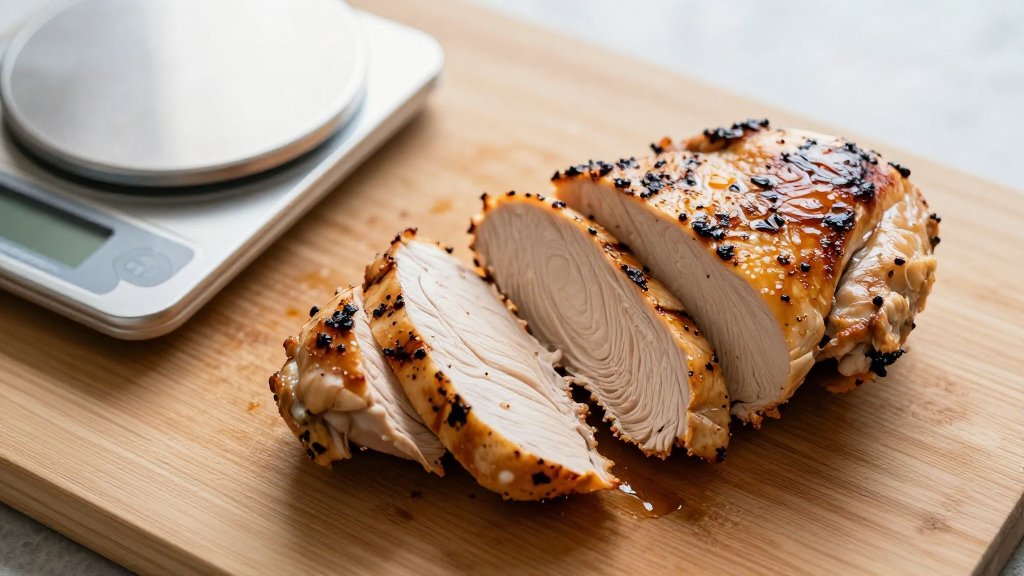
A cooked chicken breast gives you about 54 grams of protein for roughly 285 calories, one of the leanest protein hits you can put on a plate. That single number is why chicken breast protein shows up in almost every weight loss and muscle building plan. The catch is that the figure moves around a lot depending on how you weigh it and how you cook it.
Per 100 grams, cooked skinless breast lands near 165 calories with 31 grams of protein, based on USDA figures compiled by MedicineNet. So how much protein in a chicken breast really comes down to the size on your cutting board. Weigh it, and most of the guesswork disappears.
Chicken breast protein and calories at a glance
Chicken breast is popular because the protein to calorie ratio is hard to beat. About 77 percent of its calories come from protein, according to Healthline, with almost no fat and zero carbs. That lean profile makes the nutritional value of chicken breast easy to plan a day around.
A cooked chicken breast packs about 54 grams of protein for roughly 285 calories, one of the best protein to calorie ratios on your plate.
How much protein in a chicken breast by weight
Raw and cooked numbers are not the same, and that trips people up. Raw skinless breast is about 110 calories and 23 grams of protein per 100 grams. Cooking drives off water, so the same meat concentrates to roughly 165 calories and 31 grams once it is done.
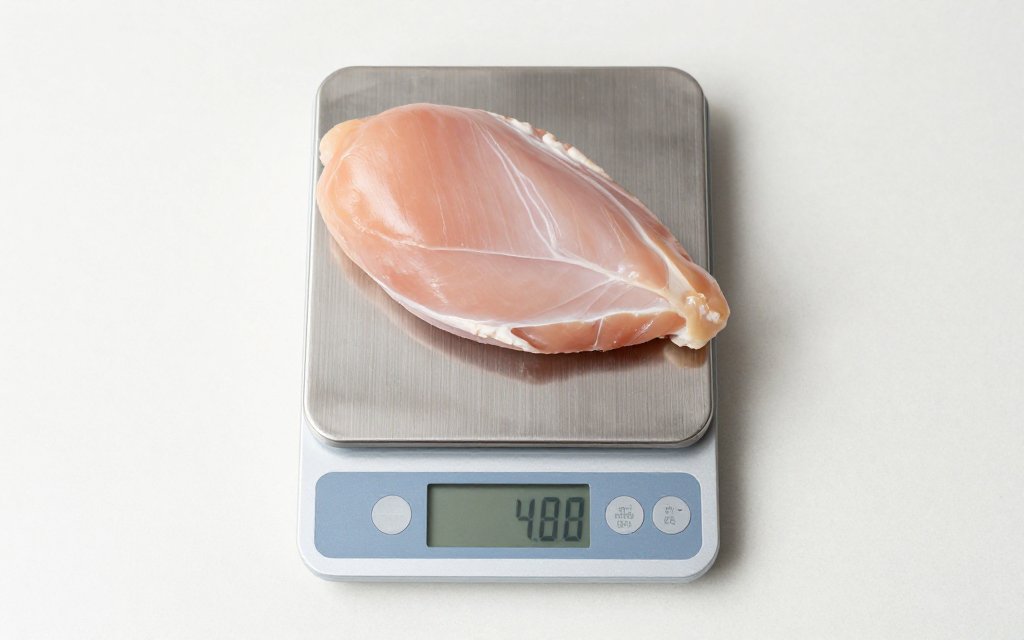
That is also why weighing raw is the cleaner habit. Chicken loses roughly a quarter of its weight to water during cooking, so 150 grams of raw breast becomes about 115 grams on the plate. If you log the cooked weight against raw data, your chicken breast calories will read low.
Weigh chicken raw when you can. It loses about a quarter of its weight to water once cooked, which quietly changes every number on the label.
Chicken breast protein per ounce and per serving
Here is the per portion math on cooked, skinless breast. One ounce is about 47 calories and 9 grams of protein. A 4 oz cooked breast runs near 186 calories with about 35 grams of protein, and a typical whole breast around 6 oz lands close to 285 calories and 54 grams.
4 oz chicken breast protein and calories
A 4 oz cooked portion is the number most gym plans use, and it is easy to picture as a piece about the size of your palm. At roughly 35 grams of protein, two of them clear 70 grams in a day from chicken alone. The 4 oz chicken breast protein figure is a handy anchor for building meals.
| Portion | Calories | Protein |
|---|---|---|
| 1 oz cooked | 47 cal | 9 g |
| 3 oz cooked | 140 cal | 26 g |
| 4 oz cooked | 186 cal | 35 g |
| 100 g cooked | 165 cal | 31 g |
| Whole breast | 285 cal | 54 g |
Grilled chicken breast calories versus fried
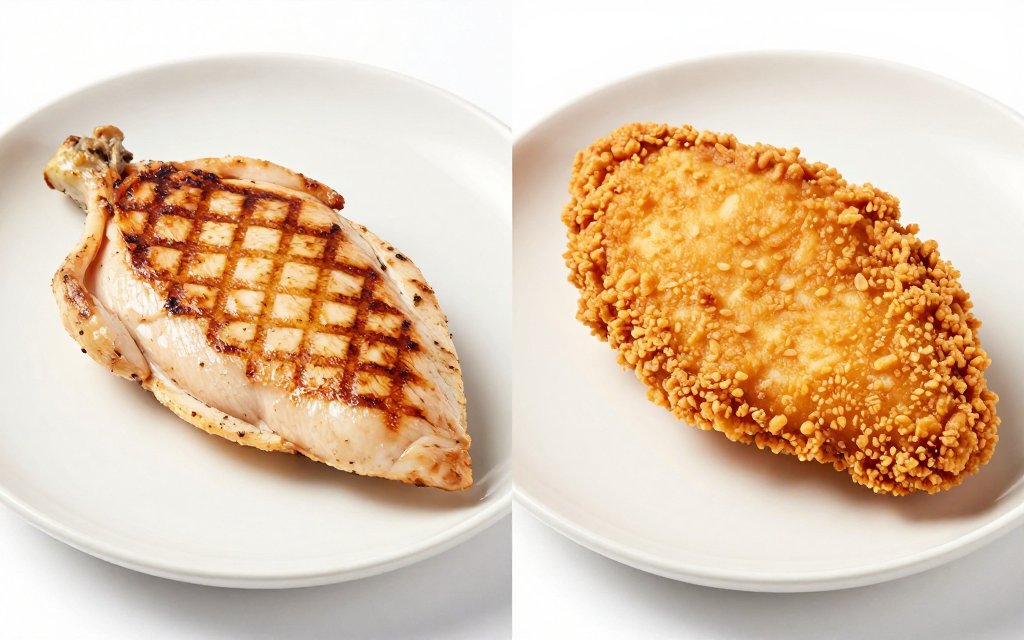
How you cook it barely touches the protein but can swing the calories hard. A whole breast grilled comes in around 284 calories, and baked is nearly identical at 287. Grilled chicken breast calories stay low because dry heat adds no oil to the meat.
Baked chicken breast calories stay low too
Baked chicken breast calories track grilling almost exactly, near 167 per 100 grams, since both rely on dry heat. Air frying a whole breast is about 295 calories. The real jump comes with oil and breading, where a deep fried, breaded breast can reach 450 calories while protein slips to about 43 grams.
| Method | Calories | Protein |
|---|---|---|
| Grilled | 284 cal | 53 g |
| Baked | 287 cal | 52 g |
| Air fried | 295 cal | 51 g |
| Pan fried | 340 cal | 50 g |
| Breaded fried | 450 cal | 43 g |
Swapping a breaded, deep fried breast for a grilled one can save more than 150 calories from the exact same cut of meat.
Chicken breast nutrition beyond the protein
Protein gets the spotlight, but chicken breast nutrition has a few other levers. Leaving the skin on pushes a 100 gram portion from 165 up to about 197 calories, since the skin adds roughly 32 calories plus saturated fat. The lean meat itself stays close to 3.6 grams of fat.
If you are comparing cuts, the breast wins on leanness. Chicken breast meat calories sit lower per gram of protein than thigh, drumstick or wing. Healthline lists thigh at 176 calories and 25 grams of protein per 100 grams, so the breast delivers more protein for fewer calories. See our high protein foods ranked by calorie for how it stacks up.
What a whole chicken breast means for your day
Put in body terms, protein targets are where this pays off. The RDA is 0.8 grams of protein per kilogram of body weight, but Harvard Health notes active adults often do better on 1.2 to 2.0 grams per kilogram. For a 70 kilogram person aiming high, that works out to about 140 grams a day.
One whole cooked breast covers close to a third of that target for about 285 calories, which leaves plenty of room for the rest of your food. That is the real draw. You hit a big protein number without spending much of your calorie budget. Pair it with a simple macro plan and the day builds itself.
Chicken is not your only lean option, of course. Fish stacks up well too, and you can compare it in our guide to how much protein in salmon. Rotating proteins keeps meals interesting while the numbers stay honest, and tracking each one keeps you accountable.
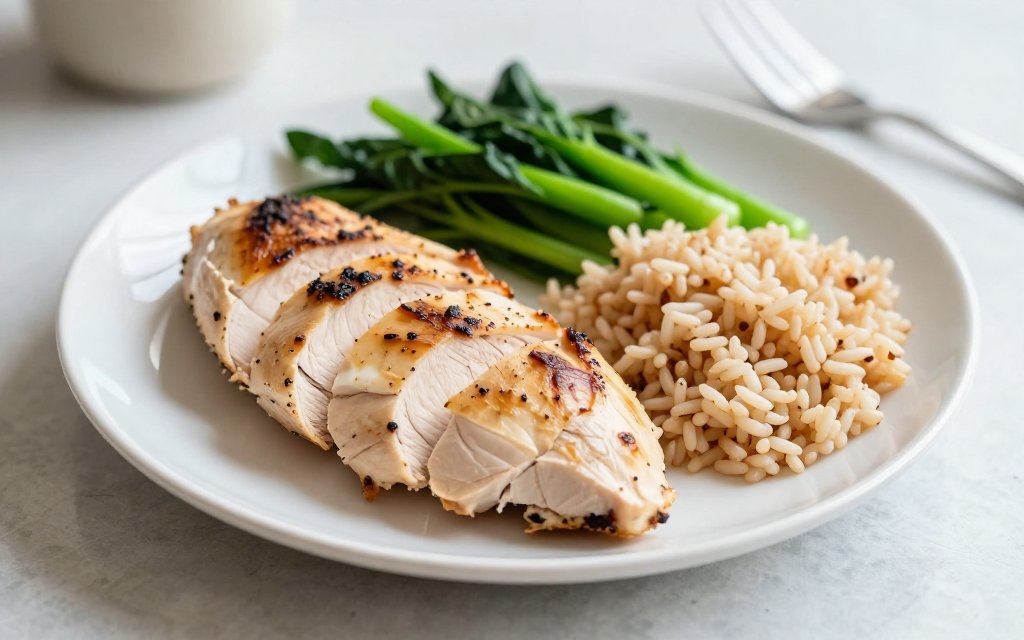
Common questions about chicken breast
How many grams of protein in a chicken breast?
A whole cooked, skinless breast holds about 54 grams of protein, while 100 grams holds 31 grams and a 4 oz portion about 35 grams. Raw meat weighs lighter on protein per gram because of its water content. Weigh your piece and match it to cooked or raw data to see how many grams of protein in chicken breast you are really eating.
How many calories are in a chicken breast?
A typical whole cooked breast is around 285 calories with the skin off. Per 100 grams it is about 165 calories, and a 4 oz serving is near 186. If you want to know how many calories is in a chicken breast on your plate, the cooking method and the skin are the two things that move it most.
Is chicken breast protein enough on its own?
It is a strong base, but variety still matters. Chicken breast protein is complete and lean, yet mixing in eggs, fish, dairy and beans covers more nutrients across the week. Use it as an anchor, not the whole plan, and keep an eye on your total calories.
Chicken breast is an easy protein win, but steady progress comes from logging it and seeing how it fits your day. Snap a photo of your plate, let the app read the portion and macros, and take the guesswork out of calorie counting. Start tracking your nutrition today for free. Get the app here: iOS or Android.
Start Tracking Your Nutrition Today
Download CalMeal for free and take the guesswork out of calorie counting with AI-powered food recognition.

