Fibermaxxing for Weight Loss: Track 30g Daily
Fibermaxxing is the simplest “eat more, weigh less” strategy that actually feels doable: prioritize high-fiber, low-calorie foods until you reliably hit about 30g of fiber a day. This guide shows what fibermaxxing is, why it helps with satiety and gut health, and exactly how to track fiber in a macro app without accidentally overeating calories.
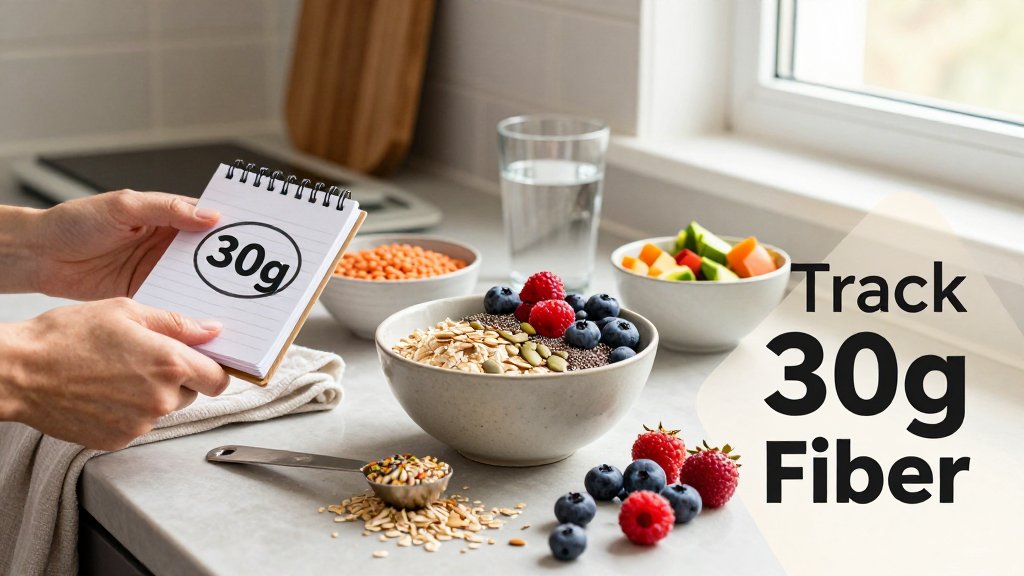
It is 3pm, your lunch was not that long ago, and you are already scanning the pantry for something sweet or crunchy. If that sounds familiar, fiber may be the lever you are missing because it helps you feel full longer without relying on sheer willpower. In this guide, you will learn how to “fibermaxx” for weight loss by aiming for about 30g of fiber per day (roughly 25 to 35g), keeping calories reasonable, and using a tracker to make the habit automatic.
What fibermaxxing means for fat loss
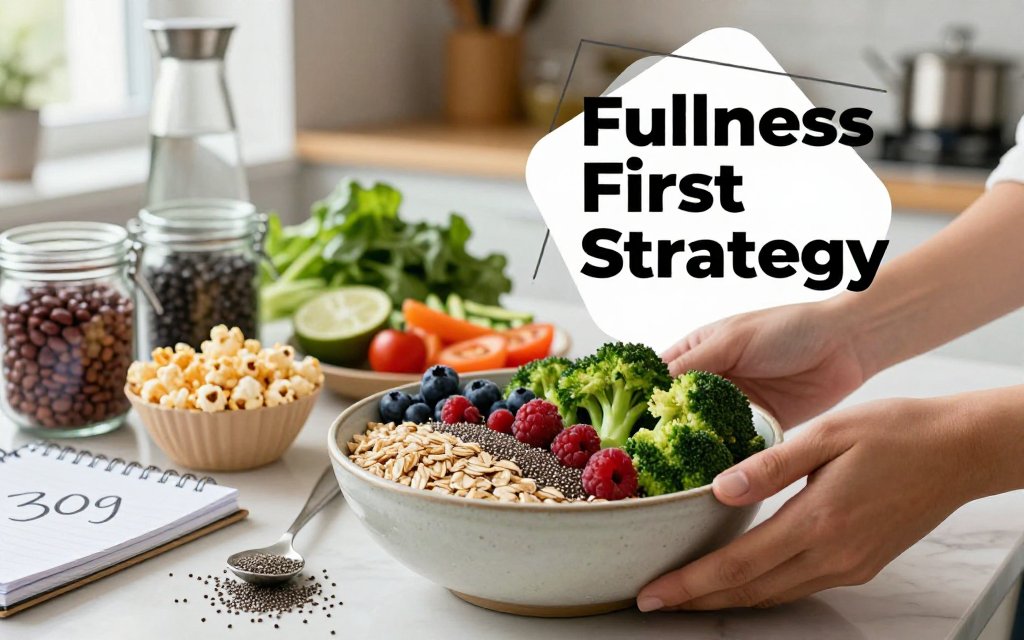
Fibermaxxing is basically the opposite of “I will just eat less and hope I am not miserable.” It is a meal-building approach where you prioritize high-fiber plant foods early, so your plate feels big, your eating pace slows down, and your appetite stays calmer for longer. Think: berries, beans, lentils, oats, popcorn, vegetables, and seeds, not tiny “diet” portions. For fat loss, that matters because most people do not struggle with knowing what calories are, they struggle with staying consistent when hunger, cravings, and busy schedules hit. Fibermaxxing is a practical way to make your calorie target feel less restrictive by changing what those calories look like in your bowl.
Here is the quick reality check: fiber is not a magic fat burner. You still lose fat by spending more energy than you eat over time, and that usually means a steady calorie deficit. What fiber does extremely well is make that deficit easier to stick to. High-fiber foods are usually higher in volume, higher in water, and they take more chewing, so you get more “food experience” per calorie. That combination can cut down on snack attacks, reduce the urge to graze all afternoon, and make your intake more consistent day to day, which is where most weight loss plans succeed or fail.
Fibermaxxing in one sentence, plus the 30g target
Fibermaxxing means building meals around fiber-rich plants first, then fitting protein and fats, so you hit about 30g fiber daily without blowing your calorie budget. Why 30g? It is a practical middle target in the common 25 to 35g zone suggested for many adults, and it is high enough to noticeably change fullness without forcing you into a “salad only” life. A helpful rule of thumb many guidelines use is fiber per 1,000 calories, which keeps your goal tied to your real energy needs. If you are also managing appetite changes from medication, pair this with GLP-1 protein and fiber tracking so your daily targets work together.
In real life, 30g is not “eat a mountain of bran.” It is more like building in two or three deliberate fiber anchors. Example day that stays pretty calorie-friendly: breakfast could be a 300 calorie bowl of 0 percent Greek yogurt plus 1 cup raspberries (around 8g fiber) and 2 tablespoons chia seeds (around 10g fiber). Lunch could be a big chopped salad with 3 to 4 cups of crunchy veggies, salsa as dressing, and 1/2 to 3/4 cup black beans (often around 7 to 11g fiber, depending on portion). Add a snack like a pear (around 5 to 6g fiber). You are already hovering near 30g, and none of that requires huge calories because the volume and water content are doing the heavy lifting.
If you are hungry an hour after eating, do a fiber check. Add one high-fiber plant to your next meal, like beans, berries, or oats, and watch your snack urges calm down.
Why it works: satiety, cravings, and your ‘calories per bite’
Fibermaxxing works because it quietly changes your “calories per bite.” A lot of ultra-tasty snack foods pack calories into a small, easy-to-eat portion, so you can eat 300 calories in a few minutes and still feel like you barely ate anything. High-fiber foods flip that script. Fiber adds bulk, it holds water, and it usually shows up in foods that require more chewing. More chewing and more volume often means your brain gets a stronger “we ate a meal” signal before you overshoot your calorie target. A simple way to test this: compare how long it takes to eat a granola bar versus a bowl of berries and cottage cheese, even if calories are similar.
Here is a concrete swap that many CalMeal users find eye-opening. Say your usual afternoon treat is a 300 calorie pastry. You can keep the same 300 calories, but shift the shape of the meal: 170g nonfat Greek yogurt, 1 cup blueberries, and 1 tablespoon chia or ground flax. The yogurt brings protein, the berries and seeds bring fiber, and the whole bowl has more volume and more spoonfuls. Hunger tends to come back slower because fiber plus protein changes how fast you finish eating and how quickly the next craving hits. That pattern also shows up in research, including a POUNDS Lost fiber study where higher fiber intake predicted better weight loss and diet adherence during calorie restriction.
High-fiber, low-calorie eating looks like meals with visible volume, juicy or crunchy textures, and a little extra time to finish. You will usually see at least one of these signs: a pile of vegetables, a bean or lentil component, fruit with seeds or skins, or whole grains that are chewy instead of fluffy. Tracking makes this easier because you stop guessing. In CalMeal, try setting a fiber target of 30g and aim for 8 to 12g by lunch, then 20g by dinner, leaving room for a fruit or popcorn-style snack. Increase gradually, drink water, and check with your clinician if you have digestive conditions or need personalized guidance.
How to track fiber like a macro
Fiber tracking gets easy once you know where it lives. On packaged foods, fiber is listed as “Dietary Fiber” under “Total Carbohydrate,” usually in grams per serving. If you are ever unsure where to look, the FDA’s Nutrition Facts Label guide shows the exact layout and what each line means. In a macro tracker, fiber typically appears as its own nutrient under carbs, sometimes next to sugar and sugar alcohols. Your only job is to log the same serving size you actually ate, then watch the fiber number the same way you watch protein.
Most tracking errors happen because food databases are messy, not because you are doing it wrong. A “banana, medium” entry might have fiber, but a restaurant “banana smoothie” entry might show zero fiber because the listing is incomplete. Packaged foods are easiest because barcode scans usually pull the label fiber correctly. For whole foods, use entries that specify raw vs cooked and include a gram weight option. Example: 100 g cooked lentils is not the same as 100 g dry lentils, and the fiber difference can swing your day by a lot. If your app lets you set nutrient targets, add fiber as a daily goal at 30 g, then keep it visible on your home dashboard.
The two-minute fiber tracking method
Start with a simple workflow you can repeat on busy days. Step 1: set a 30 g daily fiber goal in your tracker (treat it like protein). Step 2: log breakfast first, even if the rest of the day is unknown. A high-fiber breakfast gives you breathing room, like 1/2 cup dry oats (about 150 calories, 4 g fiber) plus 1 cup raspberries (about 64 calories, 8 g fiber) plus 1 tablespoon chia (about 60 calories, 5 g fiber). Step 3: “fiber-fill” the rest of the day by checkpoints, aim for 8 to 10 g by lunch, 20 g by dinner, then top off to 30 g with a snack.
Tracking fiber is simple: look for Dietary Fiber under Total Carbohydrate, log the exact serving size you ate, then glance at your daily total at lunch and dinner. That one habit makes your plan feel automatic.
The most common mistake is logging calories and protein, then forgetting fiber because it is not labeled as “a macro.” The result is predictable: hunger feels higher than it should, even when calories look “perfect.” The fix is to clean up a few logging habits so your fiber number is real. Use this quick checklist the next time your day ends at 12 g even though you swear you ate “healthy.”
Now for the “fiber-fill” part, keep a short bench of low-calorie, high-fiber add-ons you actually like. Think: berries, apples, pears, baby carrots, air-popped popcorn, edamame, lentil soup, and big salads with beans. If dinner is planned and you are sitting at 18 g, you do not need a perfect recipe, you need a simple booster, like an apple (about 95 calories, 4 g fiber) or 2 cups air-popped popcorn (about 60 calories, roughly 2 g fiber). This approach pairs well with energy density hacks for fewer calories, since many high-fiber foods also add volume for minimal calories.
Table: 25 to 35g daily fiber, translated into meals
Use the table as a fast “what does this look like in real life?” translator. The point is not perfection, it is pattern recognition. If you are regularly under 15 g, jump straight to 35 g and you might feel gassy and uncomfortable. Instead, increase gradually by about 3 to 5 g every few days, and keep fluids consistent. Your tracker makes this easy because you can see the weekly trend. Aim for one high-fiber anchor at breakfast, one at lunch, then choose a small add-on snack only if you need it to hit your target.
| Target | Pattern | Combo |
|---|---|---|
| 25 g | 3 meals | oats + berries |
| 28 g | 3 meals | lentils + salad |
| 30 g | 3 meals + snack | chia + yogurt |
| 32 g | 3 meals + beans | black beans bowl |
| 35 g | 3 meals + 2 snacks | popcorn + apple |
A simple way to stay consistent is to check fiber at two moments only: right after you log lunch, and right after you log dinner. If lunch ends and you are below 8 g, add a fruit or a veggie side. If dinner ends and you are below 20 g, add a bean or lentil component (even 1/2 cup cooked beans can move the needle fast). Then keep your “top-off snack” boring and reliable, something you can repeat without decision fatigue. Over a couple weeks, fiber starts to feel just like a macro, it becomes part of your daily math, and it often makes your calorie target easier to stick with.
High-fiber foods that stay low-calorie
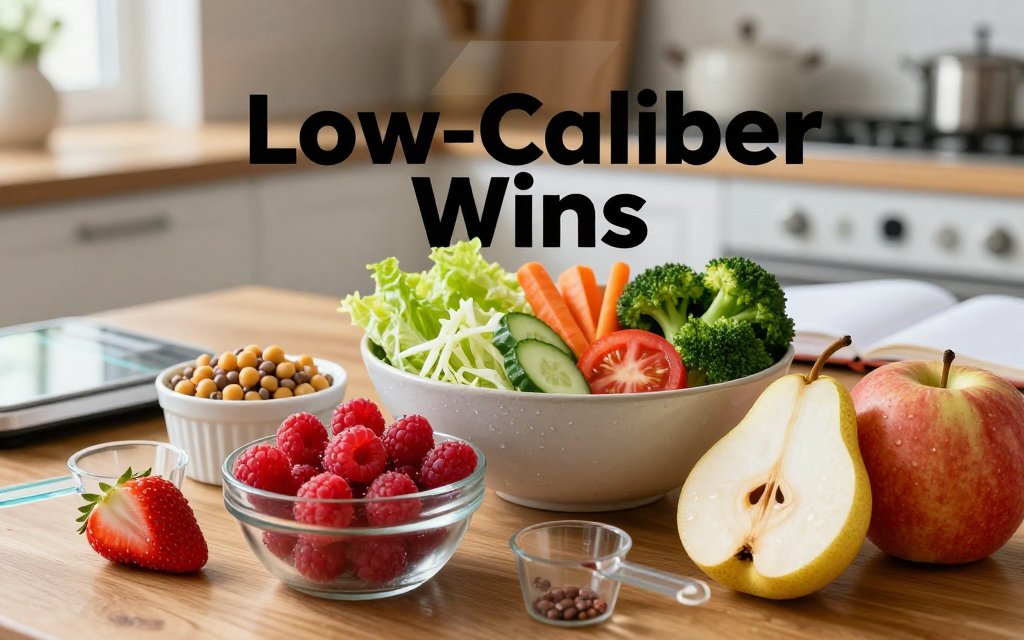
If your goal is fat loss, the best fiber strategy is not just “eat more fiber.” It is “buy fiber with as few calories as possible.” That usually means high-volume foods that take up space in your bowl and your stomach: watery fruits, non-starchy vegetables, and legumes that bring fiber plus protein. The simple playbook is to build most meals around big, low-calorie plants first, then add a measured amount of higher-calorie “boosters” (like seeds, nuts, and granola) so they do not quietly turn a smart meal into a calorie surplus.
Best fiber per calorie picks for real life
Start with fruit that gives you real chewing, high water content, and a strong fiber-to-calorie ratio. Raspberries are the classic win (about 64 calories per cup with about 8 g fiber), and strawberries and blackberries also pull their weight. Apples and pears are “portable fiber” that show up cleanly in a tracker: one medium apple is roughly 95 calories with about 4 g fiber, and a medium pear is roughly 100 calories with about 6 g fiber. A practical logging pattern is “1 cup berries + 1 medium fruit” as your afternoon snack, then you can top up dinner with veggies to close the fiber gap.
Vegetables are where low-calorie volume really shines. Think big piles of broccoli, carrots, leafy greens, cabbage, cauliflower rice, zucchini, peppers, mushrooms, and tomatoes. One cup of chopped broccoli is only around 30 to 35 calories and still adds fiber, which means you can build a “two-cup minimum” veggie rule at lunch and dinner without blowing your budget. In your tracker, log vegetables by cups (or grams if you use a kitchen scale), then watch how quickly fiber rises while calories barely move. If you are making a salad, use the base as a fiber ramp: romaine plus shredded cabbage plus cucumber plus tomatoes plus carrots beats a tiny spring mix bowl every time.
Legumes are your best “fiber per forkful” tool: beans, lentils, and chickpeas raise fiber fast, and they also add protein so you stay satisfied longer. A common portion that works for weight loss is 1/2 cup cooked lentils (about 110 to 115 calories and about 8 g fiber), which you can verify in the USDA lentil nutrient data. Try adding 1/2 cup chickpeas to a salad, stirring black beans into taco bowls, or swapping part of your rice for lentils in a curry. Edamame is another easy win: 1/2 cup shelled edamame adds fiber and protein with a moderate calorie cost, and it logs neatly as a single item in most trackers.
Use smart add-ons and snacks to “patch” your fiber without turning the day into a grazing fest. Air-popped popcorn is a high-volume snack that feels huge for the calories (about 3 cups is around 90 to 110 calories with about 3 to 4 g fiber). Oats are another reliable base: 1/2 cup dry oats (cooked with water) is roughly 150 calories with around 4 g fiber, then berries and a measured spoon of seeds can lift it further. For add-ons, chia and ground flax are powerful, but measure them: 1 tablespoon of chia or ground flax can add a meaningful fiber bump, yet those calories still count, so log the tablespoon, not “some seeds.”
Chasing “high-fiber” labels can backfire. For weight loss, pick fiber that comes with volume: fruit, veggies, and beans. Then measure calorie-dense fiber foods (nuts, granola, seeds) like condiments, not like the main event.
Common ‘healthy’ traps that stall fat loss
Smoothies are the sneakiest fiber trap because they remove chewing time and make it easy to drink 400 to 800 calories fast. Even if the ingredients are “clean,” a large banana, a couple tablespoons of nut butter, oats, and sweetened yogurt can push calories up quickly. If you love smoothies, keep the structure tighter: pick whole fruit over juice, cap calorie-dense add-ins to a measured tablespoon, and consider blending in spinach or zucchini for volume without many calories. The same warning applies to nuts, trail mix, granola, and “high-fiber” bars. They can contain fiber, but the portion that looks small in your hand can be 200 to 300 calories.
Restaurant salads can be another calorie surprise. A bowl that starts as greens and veggies can turn into an 800-calorie meal once you add crispy toppings, cheese, candied nuts, avocado, and a heavy dressing. The fix is not to fear salads, it is to build them like a tracker-friendly formula. Keep the base huge (greens, extra crunchy veggies), add a legit fiber anchor (1/2 cup beans or lentils), choose a lean protein, then measure the high-calorie extras. Ask for dressing on the side, and decide what you actually want: maybe feta, maybe nuts, maybe avocado, but rarely all three at full portions.
A simple way to keep “fiber per calorie” high is to use beans and vegetables as the swap, not the side. Try replacing half your rice with cauliflower rice plus black beans, or replacing part of pasta with lentils and mushrooms in a meat sauce. You still get the comfort-food vibe, but the same bowl now has more chew, more volume, and a much better fiber return on your calories. If you have any medical condition (especially digestive issues) or you are making a big jump in fiber intake, check with your clinician, and increase gradually with extra water so your body stays comfortable.
Supplements, gut comfort, and weekly consistency
If you have ever started strong on Monday and felt totally derailed by Thursday, you are not failing. You are just missing a system for the three things that usually trip people up: (1) busy days when whole foods feel inconvenient, (2) stomach discomfort when fiber jumps too fast, and (3) weekends that break the rhythm. A helpful north star is the common guideline of about 14 g fiber per 1,000 calories, which is why 30 g per day makes sense for many calorie targets, according to the Academy of Nutrition and Dietetics fiber guidance. Your goal here is consistency, not perfection.
Fiber supplements vs whole foods: what to do in a busy week
Whole foods first is still the winning rule because they bring fiber plus volume, water, and micronutrients that help meals feel satisfying. Think: berries, pears, beans, lentils, oats, chia, veggies, and potatoes with the skin. On a normal workday, you can rack up fiber without “diet food” vibes: a breakfast of oatmeal plus 1 tablespoon chia (about 5 g fiber) and a cup of raspberries (about 8 g) gets you close to half the goal for roughly 300 to 350 calories. Lunch can be a turkey wrap plus a side of 1/2 cup black beans (about 7 to 8 g) tossed into a salad. That combo usually beats a supplement for fullness.
Supplements can be a smart backup when the day is chaos, like travel, back to back meetings, or a dinner that is basically “whatever is left in the fridge.” Psyllium husk, wheat dextrin, and methylcellulose are common options, but the practical rules matter: start with a smaller dose than the label maximum, mix with plenty of water (many people do well with 8 to 12 oz), and take it at a time you can keep hydrating. Log supplement fiber the same way you log food fiber, so your totals stay honest. Also, do not treat supplements as a way to cancel out low-produce eating. They help you hit a number, but they do not replace a “plants most days” pattern.
Gut comfort is mostly about pace and distribution. The fastest way to get bloated is to jump from 10 g a day to 30 g overnight, especially if your new fiber is mostly beans, raw cruciferous veggies, and inulin added to protein bars. A more comfortable approach is to increase gradually and spread fiber across meals, which is also recommended by the Harvard T.H. Chan School of Public Health fiber overview. If your stomach feels “tight” or gassy, reduce the jump size, switch some fiber to cooked foods (like roasted carrots, oatmeal, and lentil soup), and pair higher fiber meals with extra fluids.
Weekly consistency is where weight loss results usually live. Build two weekday “defaults” you can repeat (for example, oatmeal breakfast, salad plus beans lunch, and a veggie heavy dinner), then create weekend anchors so you do not swing from 30 g on weekdays to 10 g on Saturday. Easy anchors: one piece of fruit before your first coffee, a side salad or veggie soup with your restaurant meal, and a high fiber snack you actually like (air popped popcorn, edamame, or a chia yogurt cup). If you track in a calorie app, check your weekly average fiber, not just single day wins. A steady 25 to 30 g average often beats occasional 40 g spikes.
FAQ: Fibermaxxing for weight loss
What is fibermaxxing, and does it actually help you lose weight?
Fibermaxxing is the idea of intentionally prioritizing high fiber foods (and sometimes supplements) so you consistently hit a daily target, like 30 g. It can support weight loss because higher fiber meals are often more filling for the calories, which can make it easier to stay in a calorie deficit without feeling constantly hungry. The simplest way to test it is tracking: set a 30 g fiber goal, keep your usual calorie target, and aim for 8 to 12 g per meal. If you have GI conditions or unexplained symptoms, check with a clinician before increasing fiber.
How do I hit 30 grams of fiber a day without overeating calories?
Use “fiber per calorie” winners and spread them out. One example day: oatmeal plus raspberries and 1 tablespoon chia at breakfast (around 13 to 15 g), a big salad with 1/2 cup beans at lunch (around 7 to 9 g), and dinner with 1 cup broccoli plus a medium baked potato with skin (around 8 to 10 g). That is roughly 30 g with a lot of food volume and typically under 1,600 to 1,900 calories depending on portions and protein choices. Track fiber like a macro, and keep the calories where you want them.
Are fiber supplements as good as whole foods for gut health and satiety?
They can help, but they are not identical. Supplements are convenient and can boost your total fiber when meals are low on plants, which may support regularity for some people when taken with enough water. Whole foods usually win for satiety because they bring chewing, volume, and a mix of fibers plus nutrients (think potassium in beans, vitamin C in fruit). For gut comfort, both can cause gas if you ramp up too fast, so start small and increase gradually. If you take medications, are pregnant, or have GI disease, ask your doctor what type and dose makes sense.
Ready to make fiber and calorie tracking effortless? Start tracking your nutrition today with CalMeal, a free app that takes the guesswork out of calorie counting using AI-powered food recognition. Download it now, log your meals in seconds, and stay on target for that 30g daily fiber goal. Get CalMeal for iOS or Android.
Start Tracking Your Nutrition Today
Download CalMeal for free and take the guesswork out of calorie counting with AI-powered food recognition.

