Getting enough fiber per day starts with high fiber foods
Only about 5 percent of adults eat enough fiber, and that gap makes weight loss harder than it needs to be. Here is how much fiber you need per day, plus the high fiber foods that keep you full on fewer calories.
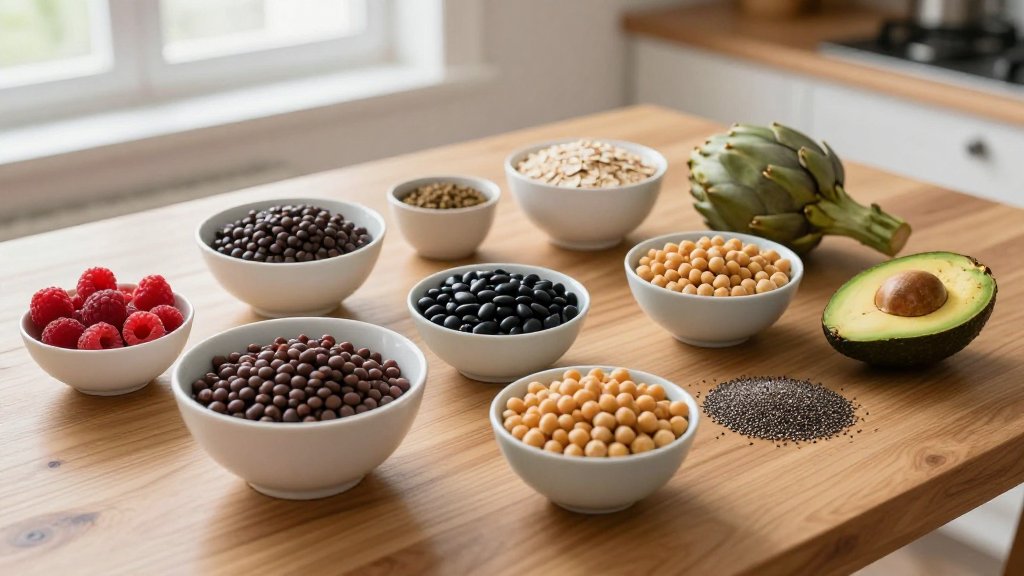
Most of us eat about 16 grams of fiber a day. The daily target sits closer to 25 to 38 grams, and only about 5 percent of American adults reach it. That gap matters more than the calorie count on the front of a box, because high fiber foods do something refined carbs never will. They keep you full for hours on the same calories, or fewer.
Fiber is the part of a plant your body cannot break down, so it adds bulk and slows digestion without adding usable calories. In a large weight loss trial, how much fiber people ate predicted their results better than any other single habit. Build your plate around high fiber foods and the rest of a calorie deficit gets a lot easier to hold.
Why high fiber foods make weight loss easier
Fiber earns its keep through fullness. It swells with water, sits in your stomach longer, and blunts the blood sugar spike that leaves you hungry an hour later. Researchers who tracked 345 dieters over six months found that fiber intake was the strongest predictor of weight loss, ahead of protein, fat, or total calories.
The effect is not small. People who stuck to their fiber goals ate roughly 25 grams a day, while those who drifted ate about 21. That 4 gram difference lined up with better appetite control and steadier progress, which is why fiber for weight loss keeps showing up in the research.
In that six month study of 345 dieters, each extra 3.7 grams of fiber a day tracked with about 1.4 kilograms more weight lost, the single strongest predictor in the trial.
How much fiber per day you actually need
The answer shifts with age and sex, but the range is easy to remember. Younger adults need the most, and the number eases down after 50. The Cleveland Clinic puts the daily goals like this, and notes that most people fall well short.
If the numbers blur together, there is a shortcut. The nutrition label uses one round figure for everyone, and you can read it off any package in seconds. Learning to spot that line is a quick win covered in our guide to reading a nutrition facts label.
Why the label says 28 grams
The Daily Value for fiber on a nutrition facts label is 28 grams, based on a 2,000 calorie day. That is why a food showing 20 percent Daily Value for fiber gives you about 5.6 grams in one serving. Chasing that percentage across the day is a simple way to answer how much dietary fiber per day you have actually eaten.
The label uses 28 grams as the Daily Value for fiber, the amount a 2,000 calorie day is built to include.
Soluble fiber foods versus insoluble fiber
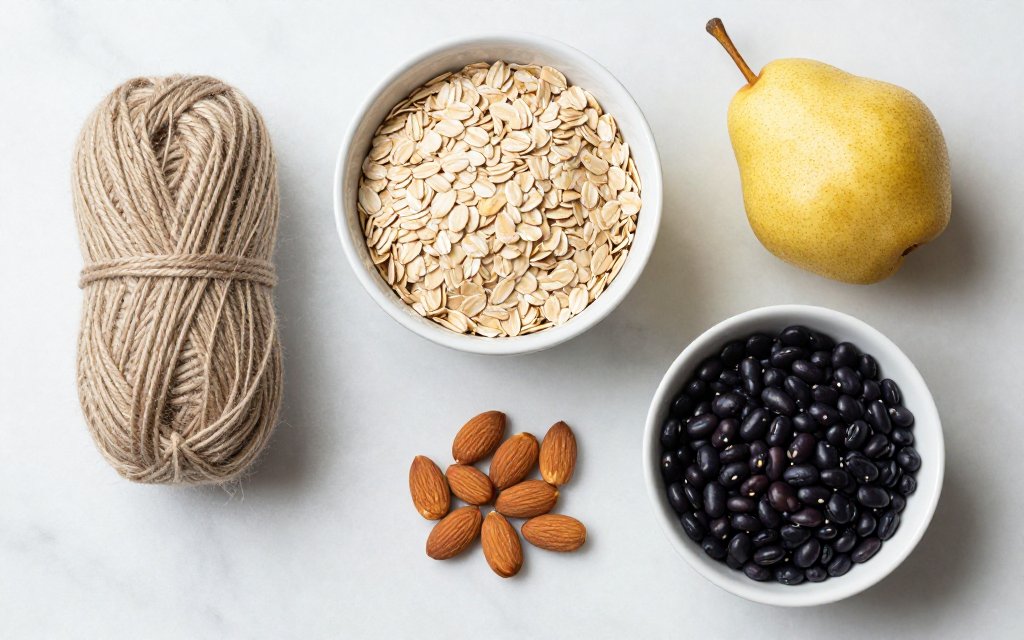
Fiber comes in two forms, and most plants carry a mix. Soluble fiber foods dissolve into a gel that slows digestion and helps you feel full, so oats, beans, apples, and chia seeds sit at the top of that group. Psyllium, the fiber in many supplements, is soluble too.
Insoluble fiber is the rough kind that adds bulk and keeps things moving. Foods with insoluble fiber include whole wheat, brown rice, nuts, and the skins on vegetables and fruit. You do not need to count each type separately. Eat a range of foods high in soluble fiber alongside whole grains and you cover both.
Which type helps you feel full?
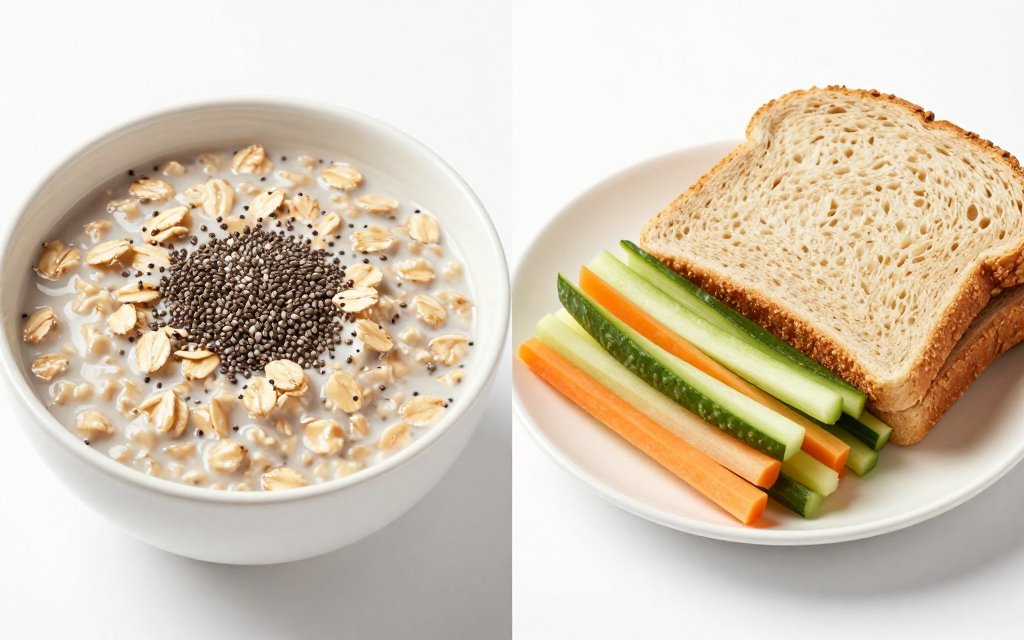
Soluble fiber is the fullness champion because it forms that thick gel and empties from the stomach slowly. Insoluble fiber still helps by adding chew and volume for very few calories. A bowl that pairs oats with berries gives you both in one sitting.
The best high fiber foods, by grams per serving
Numbers make the choice obvious. Legumes and seeds pack the most fiber per bite, while fruit and vegetables fill the middle, and the amounts below come from standard nutrition references. Keep this short high fiber foods list on your phone for grocery runs.
| Food | Serving | Fiber |
|---|---|---|
| Cooked lentils | 1 cup | 15 g |
| Black beans | 1/2 cup | 7.5 g |
| Chickpeas | 1/2 cup | 6 g |
| Chia seeds | 1 ounce | 10 g |
| Raspberries | 1 cup | 8 g |
| Avocado | 1 medium | 10 g |
| Artichoke | 1 medium | 10 g |
Legumes lead the list
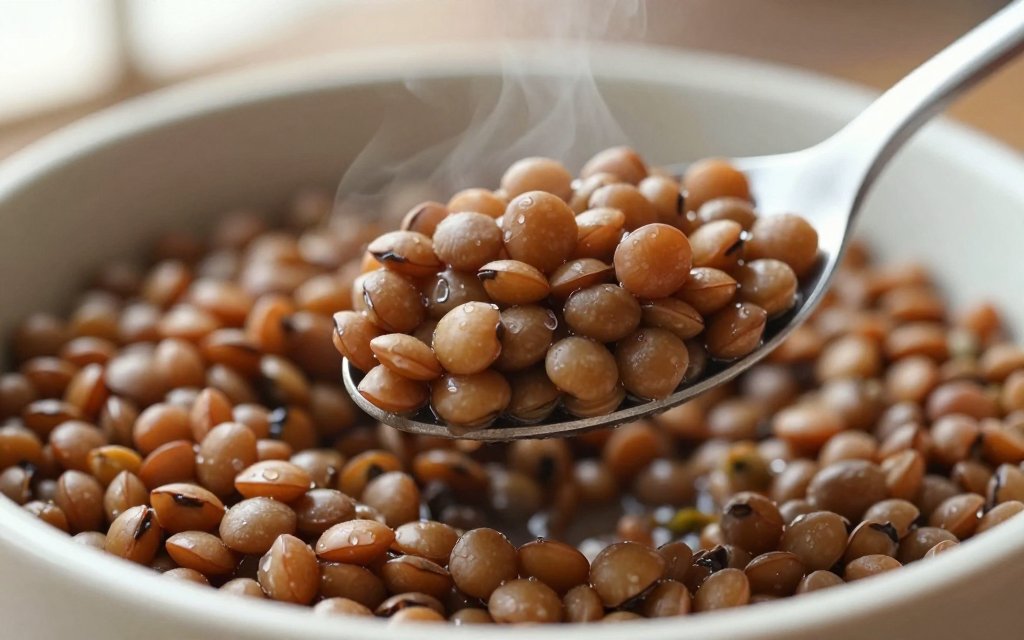
A single cup of cooked lentils delivers about 15 grams, half a day of fiber in one cheap, filling bowl. Black beans, chickpeas, and split peas land in the 6 to 8 gram range per half cup, and they bring protein along for the ride. If you change one thing this week, put a legume on your plate daily.
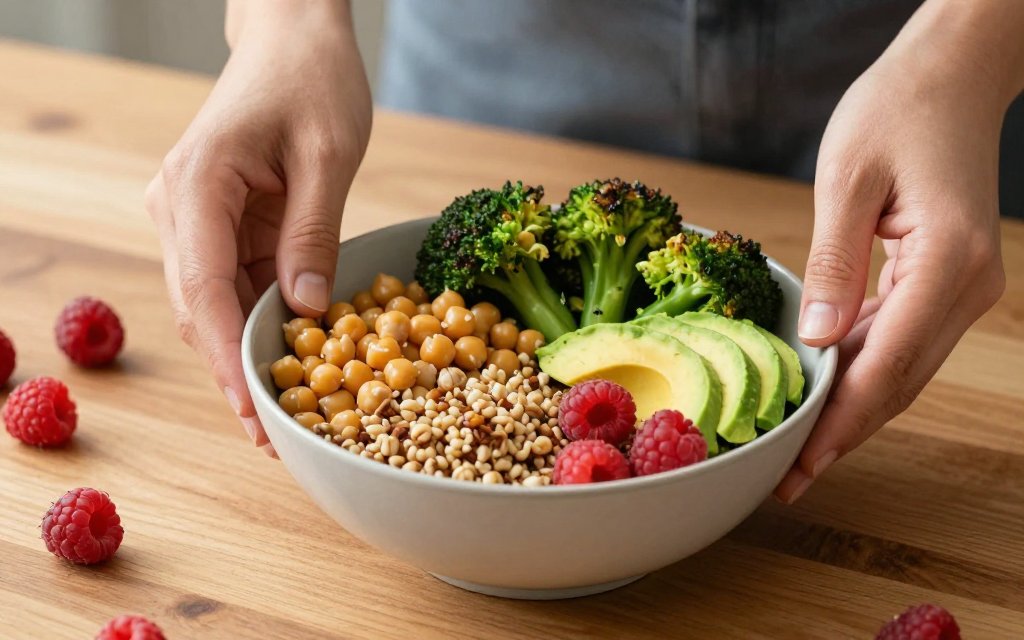
High fiber low calorie foods that stretch a budget
When your calorie budget is tight, fiber is your friend. The picks below deliver several grams while barely denting the day, so they pair well with a lean protein to build a filling plate. That combination is the backbone of tracking your macros without feeling starved.
Notice that these high fiber low calorie foods are mostly vegetables and berries. That is not a coincidence. Water and fiber together create weight and volume with almost no energy, and that is the simple case for high fiber foods for weight loss when you are trying to eat less and stay satisfied.
How to add more fiber without the bloat
Going from 16 grams to 30 overnight is a recipe for gas and cramps. Raise your intake gradually and give your gut time to adjust. Water matters just as much, since fiber needs liquid to do its job and move through you comfortably.
Planning ahead removes the guesswork. A weekend of meal prep built around beans, oats, and roasted vegetables can lock in most of your fiber before the week starts. Apps like CalMeal log the fiber line for you, so you can see the running total instead of guessing.
A gentle way to raise fiber: add about 5 grams a week and drink an extra glass of water with each step up, so your gut adjusts without the bloat.
Common questions about fiber and weight loss
How much dietary fiber per day is too much?
Most people never come close to too much, but past roughly 50 to 70 grams a day you may notice gas, bloating, or cramping. If you push your intake high, do it slowly and drink more water. There is no need to chase huge numbers, since hitting the 25 to 38 gram target already covers the benefits.
Do high fiber foods help you lose belly fat?
Fiber helps you lose fat overall, and belly fat comes off as part of that. The trial of 345 dieters found more fiber tracked with more total weight lost, not a spot reduction. Filling meals work by keeping you full so the daily calorie math tilts in your favor.
Can you get enough fiber without supplements?
Yes, and whole foods beat a powder for most people because they bring vitamins, minerals, and protein too. A cup of lentils, a serving of berries, and some vegetables can cover a full day. Supplements are a backup for gaps, not a replacement for a plate of real food.
Getting more fiber is one of the simplest ways to eat less without feeling hungry, and you do not have to track it by hand. CalMeal reads your meal from a photo and logs the calories, protein, carbs, and fiber for you, so you can see whether today hit your target. Start counting the numbers that actually move the scale. Get the app here: iOS or Android.
Start Tracking Your Nutrition Today
Download CalMeal for free and take the guesswork out of calorie counting with AI-powered food recognition.

