Luteal Phase Hunger Plan: Adjust Calories Without Guilt
Feeling hungrier and heavier before your period is common, and it does not mean fat gain. This practical luteal phase hunger plan explains why appetite and water retention rise, how many calories you may need, and exactly how to adjust macros and logging without derailing fat loss.

If you feel hungrier and see the scale creep up in the days before your period, it is not a motivation problem. It is your physiology. The luteal phase can increase appetite, cravings, and water retention, which can make fat loss feel suddenly harder even when you are doing everything right. In this guide, you will learn how to adjust calories without guilt, set realistic macro targets, and log in a way that keeps progress steady and stress low.
Why luteal phase hunger feels so intense
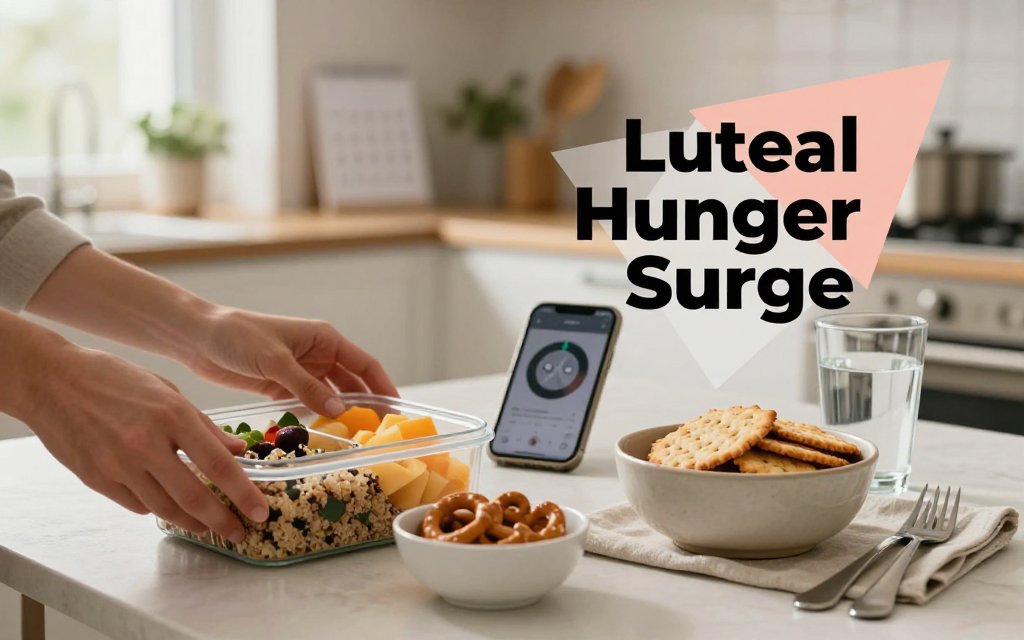
You have been nailing your routine for weeks. Your usual 300-500 calorie deficit feels steady, your meals are predictable, and logging in your tracker is almost automatic. Then suddenly, the same plan feels like it has holes in it. You are hungry again an hour after lunch, the office snacks start calling your name, and the thought of a light dinner sounds genuinely miserable. If this hits you in the week or two before your period, you are not broken, and you are not lacking discipline. A very normal hormonal shift can make your appetite louder, your cravings sharper, and your “usual” calorie target feel too tight for a few days.
The quick science in plain English
The luteal phase is the stretch after ovulation until your period starts (often about 10-14 days, though real cycles vary). During this time, progesterone rises and estrogen shifts, which can influence appetite signals and food reward. A key practical point is that calorie needs can creep up slightly for some people, but hunger can increase more than the extra burn. In research that compares menstrual cycle phases, energy intake tends to be higher in the luteal phase on average, even when people are not trying to eat more, as summarized in an energy intake meta-analysis. Translation: your body may be nudging you to eat more, even if your smartwatch does not show a dramatic change.
Hormones are only part of the story. The luteal phase can also come with worse sleep, higher perceived stress, and lower training tolerance (that “everything feels heavy” workout week). Those factors stack up fast: short sleep tends to increase snacky decisions, stress makes quick comfort foods more appealing, and hard training on lower energy can magnify cravings later. That is why cravings often skew toward carbs and salt. Carbs are fast fuel and can feel soothing when you are tired. Salty foods can feel extra satisfying when you are dealing with bloating and fluid shifts. A realistic plan looks like: add a measured portion of rice or potatoes at dinner, and pair it with protein, plus something salty-crunchy you actually enjoy, like air-popped popcorn with parmesan or roasted edamame.
Here is the snippet-ready takeaway to keep: increased hunger in the luteal phase is common and not a character flaw. What is usually “normal” is a noticeable appetite bump, stronger cravings, and a little less patience for low-volume meals for several days pre-period, especially if you are already dieting. What is a yellow flag is feeling ravenous all month long, needing willpower every single day, or seeing performance and mood slide even outside the luteal phase. If that is you, you may be under-fueling in general, not just premenstrual. Consider raising your baseline calories slightly, tightening up protein and fiber consistency, and reviewing your pattern with a clinician if you have medical concerns. If you use appetite-regulating meds, the same consistency rules apply, so bookmark GLP-1 protein and fiber tracking for a simple checklist.
Common mistake: treating cravings like an emergency
One of the fastest ways to make luteal hunger worse is to treat it like a crisis. All-or-nothing thinking sounds like: “I should be good,” “I already messed up,” or “I will just skip lunch to make up for last night.” That pattern usually backfires. Skipping meals raises the odds you will overdo it later, not because you are weak, but because you are human and your brain is trying to protect you from a perceived shortage. The most common binge-restrict loop in this phase is light breakfast, tiny salad lunch, then a late afternoon crash that turns into grazing, followed by a big nighttime meal you did not even enjoy.
A better reframe is simple: plan for higher hunger like you would plan for a busy week. You do not “white-knuckle” through a crazy schedule without prepping, you build a structure that makes success easier. For many calorie counters, that means a small, intentional adjustment for 5-10 days, often 150-250 calories per day, and a little more emphasis on carbs at meals where you tend to snack. Example: if you usually eat 1,750 calories, a luteal target of 1,900 can still support fat loss while reducing the risk of rebound overeating. Build the extra calories from a clear portion, like 3/4 cup cooked rice (about 150-170 calories) or a Greek yogurt plus a banana. Then log it and move on.
How many calories in luteal phase is enough
Your best luteal phase calorie target is the one that keeps you consistent through the week before your period, not the one that looks perfect on paper. Some people do burn a little more energy in the luteal phase, but the size of that bump varies a lot between individuals and studies. That is why a rigid, one-size rule often backfires. If you want a research-based anchor, a recent systematic review on RMR summarizes how resting metabolic rate can fluctuate across cycle phases and highlights the big person-to-person differences. Practically, you can treat luteal hunger as a planning problem, then choose the smallest adjustment that prevents a spiral.
Pick your adjustment: maintain, small bump, or diet break
Start with your current daily target (for example, 1,650 calories for fat loss, or 2,100 calories for maintenance). Then make a decision based on adherence, not vibes. If you are hitting your plan most days, workouts feel fine, and your hunger is present but manageable, keep calories the same. If you are repeatedly going off-plan at night, thinking about food all afternoon, or bingeing after trying to be strict, a planned bump is usually smarter than white-knuckling. If this happens cycle after cycle, a short maintenance week can be the pressure-release valve that protects your long-term progress.
For macro trackers, a +100 to +300 calorie bump is easiest when protein stays fixed and you add mostly carbs, or a carb plus fat combo. Example: if your target is 1,650 calories with 130 g protein, keep 130 g protein, then add either 25 to 50 g carbs (100 to 200 calories) or add 20 to 30 g carbs plus 5 to 10 g fat (about 150 to 250 calories). In real food terms, that might be one extra snack like 1 banana plus 2 tablespoons peanut butter, or a planned dessert like a 150 to 250 calorie ice cream bar that you log on purpose. The goal is a controlled release, not a random free-for-all.
| Goal | Symptom | Adjust |
|---|---|---|
| Fat loss | Mild hunger | +0 kcal |
| Fat loss | Cravings | +150 kcal |
| Fat loss | Low energy | +250 kcal |
| Maintain | High hunger | +200 kcal |
| Any goal | Repeat slips | 1 week maint |
CalMeal coach note: If you add calories in the late luteal days, you are not failing. You are making a planned adjustment so you can return to your usual target after your period starts.
What to watch so you do not overshoot
Use guardrails that keep your calories from drifting upward without you noticing. First, keep protein stable, because it supports fullness and makes your log more predictable (many people do well with roughly 25 to 35 g protein per meal, or a daily target they already use year-round). Second, keep your movement baseline steady where possible, such as your usual step goal or training schedule. Third, track by weekly averages instead of demanding daily perfection. If you add 200 calories for three luteal days, that is +600 for the week. You can either accept a slightly smaller deficit that week, or you can spread a small reduction across other days without feeling punished.
Late luteal appetite loves to show up as snack-y, hand-to-mouth eating, especially in the late afternoon and after dinner. A simple fix is to pre-log one or two snacks before the cravings hit, then treat them as part of the plan. Examples that fit a 150 to 250 calorie slot: 0 percent Greek yogurt plus berries, microwave popcorn with a string cheese, or a hot cocoa made with a high-protein milk. If you prefer volume, build snacks and sides around higher-fiber foods and water-rich produce, then keep the tasty extras measured. You can also make fullness easier with energy density strategies for fullness so your calories feel bigger without turning into all-or-nothing.
If you have had two or three cycles in a row where the luteal week consistently triggers overeating, consider a planned maintenance week instead of repeating the same struggle. “Maintenance” means eating around your estimated maintenance calories while keeping your normal meal structure, protein, and logging habits. It is a strategy week, not a permission slip. After that week, return to your usual target. This approach often prevents the bigger swings that happen when restriction leads to rebound eating. If your hunger feels extreme, your mood symptoms feel severe, or you suspect something like PMDD, talk with a clinician or registered dietitian for personalized support, especially if symptoms disrupt daily life.
Cycle syncing nutrition macros for cravings and training
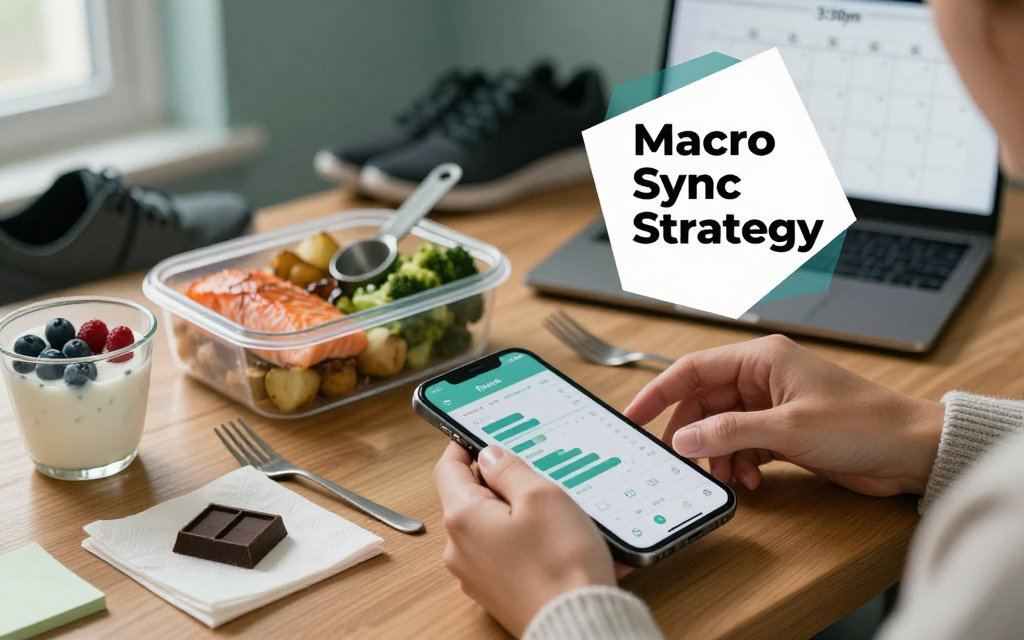
It is 3:30 pm, your calendar is stacked, and you can feel the luteal phase coming on. Lunch was “healthy” (a salad), but now you are thinking about salty chips and something sweet, and your workout later feels harder than it should. Instead of white-knuckling through it, you open your tracker and make a calm plan: a slightly higher calorie target today, built from macros that actually keep you full. Dinner is already decided (salmon, potatoes, broccoli), and you are going to “budget” a small treat so it does not turn into a snack spiral. That is cycle syncing in a practical way: you are not eating perfectly, you are eating deliberately.
Start by translating your calorie adjustment into a macro structure. If your luteal phase target is higher by about 150 to 300 calories, you usually do not need to raise everything. Keep protein steady (that is your appetite and muscle anchor), keep fats “not too low” for satiety, and let carbs do most of the moving because they are the easiest lever to pull up or down. Example: if you add 200 calories, that can be about 40 to 50 g carbs, or about 20 to 25 g carbs plus 10 g fat, depending on what makes you feel calmer and more satisfied. If you use CalMeal, set a protein minimum first, then adjust carbs upward around training and cravings.
The macro anchors that keep you full
For most fat loss diets, a helpful protein target is 0.7 to 1.0 g per pound of goal body weight. If you do not want to do math, use a simple floor of 25 to 35 g protein per meal, 3 to 4 times per day. Keep fat in the “satisfying” range, roughly 25 to 35 percent of calories (for a 1,900 calorie day, that is about 53 to 74 g fat). Then fill the rest with carbs based on training and hunger. Real-food anchors that work well here: Greek yogurt plus berries (add a spoon of peanut butter if you need staying power), turkey chili with beans, tofu stir-fry with frozen veg, oats with whey, and potatoes with salmon.
Meal structure matters as much as the macro totals. In the luteal phase, aim for “volume plus protein” early in the day so you are not playing catch-up at night. Think: a bigger lunch bowl (chicken or tofu, rice or potatoes, lots of veg, a measured sauce) instead of a light salad that leaves you prowling the pantry. Time carbs where they help most. Put more of your carbs in the meal before your workout and at dinner, especially if late-day cravings are your pattern. Use fiber and volume foods to take the edge off: big servings of vegetables, berries, legumes, and broth-based soups. A high-volume side can make the same calories feel twice as filling.
Cravings strategy: plan sweet and salty on purpose
Use a controlled inclusion approach so cravings do not feel like a “diet failure.” Pre-portion one craving buffer per day in the 150 to 250 calorie range, and treat it like part of your plan. Examples: two squares of dark chocolate, one small cookie, a flavored latte made with milk, or a microwave popcorn bag. Pair the buffer with protein or fruit to slow the snack momentum, like chocolate plus strawberries and a string cheese, or popcorn plus a Greek yogurt. Some people also like leaning into magnesium food sources such as pumpkin seeds, legumes, and cocoa. Keep hydration steady, and do not accidentally go very low-sodium if you are training and sweating, because that can make you feel oddly snacky and flat.
Build your day around a protein minimum, then spend your extra luteal-phase calories on carbs and a bit of fat. Pre-portion one 150 to 250 calorie treat so cravings feel planned, not random.
Training fuel: keep performance up without “starting over” Monday
If training feels harder in this phase, the goal is to fuel enough to keep workouts productive, not to force your usual intensity on low energy. A simple template: 60 to 120 minutes pre-workout, get 25 to 40 g carbs plus 20 to 30 g protein (banana plus whey, or oats with whey, or yogurt and granola). After lifting or intervals, aim for another 25 to 35 g protein at your next meal, and include carbs if you are doing multiple sessions per week. If you need the extra 150 to 300 calories, put them around training first, because that is where you “buy” better performance, better recovery, and usually fewer late-night cravings.
To make this actionable today, set three numbers and keep them consistent for the week: (1) a protein floor (by goal weight or 25 to 35 g per meal), (2) a fat range that keeps you satisfied (often 25 to 35 percent of calories), and (3) a carb range that can flex up on hungrier or harder-training days. Then decide your “default” meals and rotate them: turkey chili for lunches, tofu stir-fry for quick dinners, Greek yogurt plus berries for snacks, and salmon plus potatoes when you want comfort food that still supports your goals. If your hunger feels extreme, if your cycle is irregular, or if you have any medical concerns, check in with a clinician for personalized guidance.
Period weight gain, water retention, and tracking expectations
That pre-period scale jump can feel personal, especially if you have been consistent all month. The frustrating truth is that the scale often reports water, not fat, in the days leading up to your period. Hormone shifts can increase bloating and fluid retention, and your routines can change too (less sleep, fewer steps, more salty convenience foods). Even a normal day of eating can show up as a higher weigh-in if you are retaining water or if digestion is slower. Cleveland Clinic notes that many people see about 2 to 5 pounds of temporary gain around their period, and a very salty meal can move the scale by a couple pounds the next day (period weight fluctuation overview).
Glycogen and sodium are the two big “scale drama” amplifiers. When you eat more carbs (hello, luteal cravings), your body stores more glycogen in muscle and liver, and glycogen pulls water in with it. One evidence-based review in sports nutrition describes early research suggesting roughly 3 to 4 grams of water can accompany each gram of muscle glycogen stored, which helps explain rapid swings that are not body fat (review discussing glycogen water). Add higher sodium (takeout, deli sandwiches, ramen, pizza), and your body holds extra fluid to keep concentrations balanced. Result: you can “gain” several pounds from water, while still losing fat underneath.
Here is a tracking plan that keeps you grounded without obsessing. Weigh under the same conditions (after using the bathroom, before breakfast, similar clothing) and focus on trends, not single readings. If daily weigh-ins stress you out, do three weigh-ins per week and calculate a simple average. If you like daily data, use a rolling 7 day average and compare that trend to the previous month’s trend, not to yesterday. Add one non-scale metric: waist measurement at the navel once per week, plus a quick note like “ring tight” or “jeans snug” on luteal days. If you ever see unusually fast swelling, pain, or weight changes that feel extreme for you, check in with a clinician to rule out non-cycle causes.
If your scale jumps right before your period, treat it as a hydration report, not a fat report. Keep your routine steady for a week, then recheck your trend once bleeding starts.
Set realistic logging rules for the last 7 to 10 days
Your goal in the last 7 to 10 days is consistent logging, not perfect logging. This is the stretch where appetite is louder, plans get social, and precision can slip. Instead of quitting, switch to “good enough” rules that protect your weekly average. Prioritize logging protein first (even if the rest is estimated), because it anchors fullness and keeps your day structured. Use saved meals for your repeat breakfasts and lunches, and if dinner is restaurant food, estimate it once and move on without guilt. The win is continuity: the more days you keep some data, the easier it is to see patterns and adjust calmly next cycle.
One higher-calorie day does not erase progress, especially if the rest of the week is steady. Example: if your usual target is 1,900 calories and you eat 2,400 once, that is a 500 calorie bump, which can be absorbed by a solid week without drama. What slows progress is repeated untracked grazing, because “little bites” can quietly add 200 to 400 calories every day. Try a simple boundary: plan one afternoon “bridge snack” (like a 200 calorie protein bar or cottage cheese with pineapple) so you are not hunting for snacks all evening. If your logs are imperfect in CalMeal or any tracker, keep going anyway, because momentum beats accuracy.
How many calories should I add in the luteal phase?
Most people do well with a small bump of about 100 to 300 calories per day on the hungriest luteal days, not a full “free-for-all.” Start with 150 calories for three days and see if cravings and grazing drop. Good add-ons are protein plus fiber: a 170 g cup of 2% Greek yogurt plus a banana, a turkey and cheese roll-up plus an apple, or an extra scoop of rice at dinner with chicken. Next step: keep the rest of your meals the same, and judge success by fewer snack spirals and a steadier weekly average.
Is pre-period weight gain fat or water retention?
Usually it is mostly water retention, plus extra glycogen and digestion changes, not sudden fat gain. Fat gain requires a sustained calorie surplus over time, while luteal weight jumps can happen quickly after higher sodium meals, higher carbs, or poor sleep. A helpful reality check is timing: if the scale rises fast in one to two days, it is very likely water. Next step: compare your 7 day average from the week after your period starts to your luteal average. If you are seeing more than about 5 pounds of swing regularly, or swelling feels intense, talk with a clinician.
Should I keep tracking calories during PMS if my logging is messy?
Yes, keep tracking, but switch to “minimum viable logging” so you do not burn out. Log what you can confidently count (breakfast, lunch, and protein items), and estimate the rest once, then move on. If you miss a snack, do not punish yourself by skipping dinner or trying to restart on Monday. Next step: set two anchors for PMS days, like 110 to 140 g protein and one planned treat (for example a 200 calorie dessert) so cravings feel allowed and contained. If PMS symptoms are severe or disruptive, get medical guidance.
Ready to stop guessing and start tracking with confidence? Download CalMeal for free and take the mental math out of calorie counting with AI-powered food recognition. You will log faster, stay consistent through luteal phase hunger, and keep your plan grounded in real data. Get CalMeal on iOS or Android and start tracking your nutrition today.
Start Tracking Your Nutrition Today
Download CalMeal for free and take the guesswork out of calorie counting with AI-powered food recognition.

