1 tablespoon peanut butter calories versus 2 tablespoons
A level tablespoon of peanut butter is about 94 calories, but the label serving of two tablespoons is closer to 188. Here's how to log peanut butter calories right, plus lower calorie swaps and how it fits weight loss.
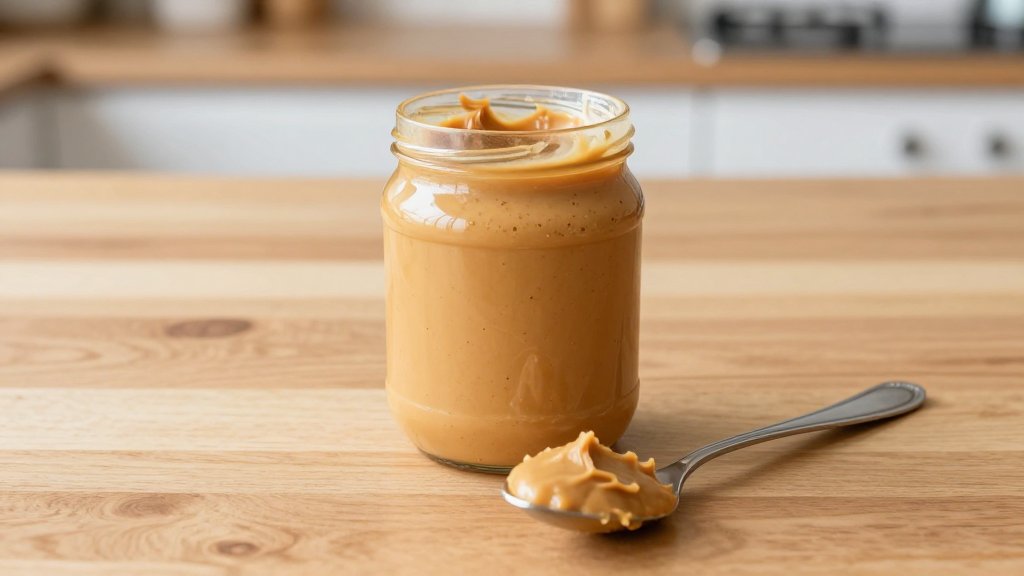
One spoon of peanut butter can mean two very different numbers. A level tablespoon runs about 94 calories, while the two tablespoon serving printed on the jar is closer to 188. Same jar, same spoon, double the total, and most of us reach for more than one scoop without really thinking about it.
That gap is why peanut butter calories trip up so many food logs. It's rich, sticky and easy to eyeball wrong, so the number you write down and the number you actually eat can drift apart fast. Weigh it or measure it, though, and this everyday favorite fits almost any plan.
Peanut butter calories per tablespoon and per two
Here's the plain breakdown. A single tablespoon, about 16 grams of smooth peanut butter, is roughly 94 calories. Double it to the standard 32 gram serving and you get about 188 calories, 8 grams of protein, 16 grams of fat and around 6 grams of carbs. The 1 tablespoon peanut butter calories count, 94, is the one worth memorizing if you only ever add a small swipe.
| Serving | Calories | Protein |
|---|---|---|
| 1 tablespoon (16g) | 94 cal | 4 g |
| 2 tablespoons (32g) | 188 cal | 8 g |
| Powdered, 2 tbsp | 45 cal | 6 g |
| 100 grams | 588 cal | 25 g |
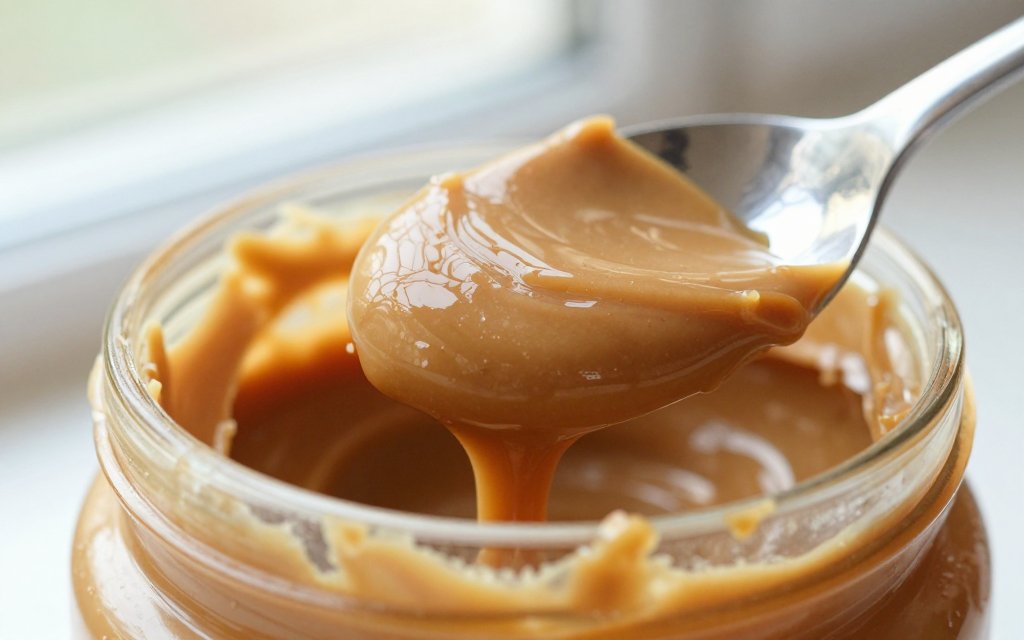
One level tablespoon of peanut butter is about 94 calories. Two tablespoons, the serving on the label, is roughly 188.
A closer look at peanut butter nutrition
Most of those 188 calories come from fat, about 16 grams, and the good news is it's mostly the monounsaturated kind. You also get 8 grams of plant protein and only 6 grams of carbs, plus roughly 2 grams of fiber. For peanut butter nutrition, that's a filling mix that keeps a small serving satisfying.
The carbs in peanut butter stay low, near 6 grams per two tablespoons, so it barely moves your carb budget, and the little bit of fiber helps. If you're trying to hit a fiber goal, peanut butter is a nice bonus rather than a main source, as our guide to getting enough fiber lays out.
Natural versus regular, does it change the calories?
Not by much. Natural jars and the regular kind land within a few calories per spoon, since the peanuts are the same. What changes is the extras. Regular brands often add a little sugar and palm oil, while natural ones separate and need a stir. Calorie wise, pick the one you'll actually stick with.
Why the size of your spoon changes everything
A tablespoon means a level tablespoon, not a mounded one. Heap the spoon and you're closer to a tablespoon and a half, which quietly adds 40 to 50 calories each time. Do that twice a day and you've tacked on the better part of a hundred calories you never logged.
The fix is boring and it works: measure. A cheap kitchen scale settles it in seconds. If you'd rather not weigh every snack, the hand and spoon tricks in our guide to reading serving sizes get you close enough to trust.
What two tablespoons cost you in a day
Put it in budget terms. Two tablespoons is 188 calories, about 10 percent of an 1,800 calorie day. One serving on toast at breakfast and another stirred into oats after a workout is 376 calories before you even count the toast or the oats.
That matters most when you're aiming for a deficit. A common target is trimming 500 calories a day to lose close to a pound a week, so an untracked heaping spoon or two can erase a real chunk of that effort. Whether your app calls it peanut butter or just PB, the pb calories count the same, so don't let the shorthand fool you. If you're still fuzzy on how fat, protein and carbs each add up, our explainer on counting macros breaks it down.
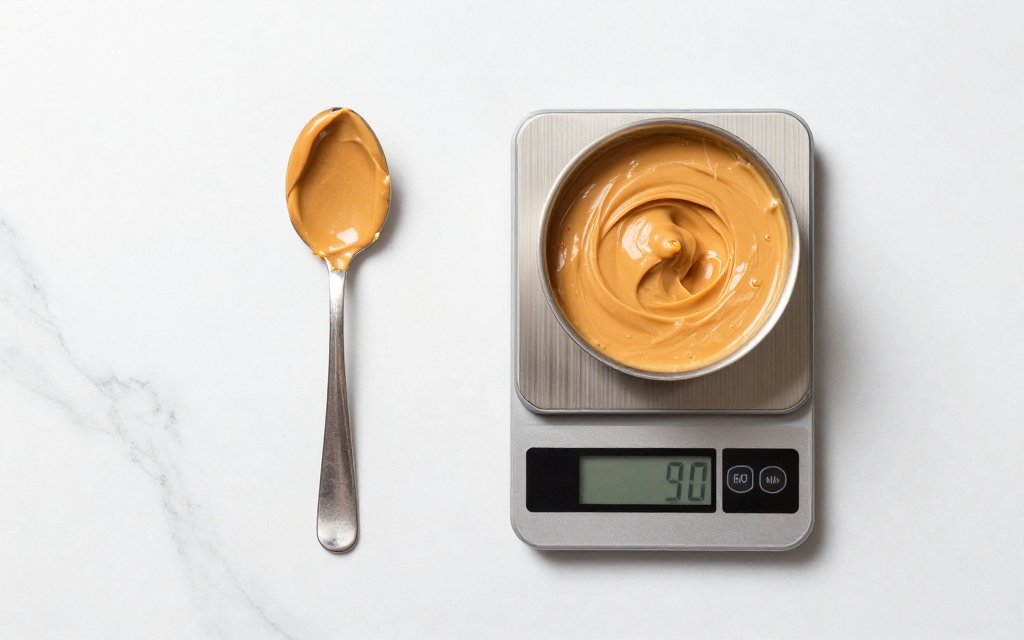
Eyeball two tablespoons and you can be off by nearly a hundred calories before you've even sat down. The scale spoon settles it.
Powdered peanut butter and lower calorie swaps
If you love the taste but not the fat, powdered peanut butter is the obvious swap. Brands such as PB2 press most of the oil out of roasted peanuts, so a two tablespoon serving drops to about 45 calories with just 1.5 grams of fat, roughly a quarter of the regular kind. That powdered peanut butter keeps most of the protein, near 6 grams, which is why it shows up in so many shakes.
Powdered peanut butter calories, and the tradeoff
The catch is what you give up. Pressing out the oil also strips most of the monounsaturated fat and vitamin E, the parts that make regular peanut butter genuinely good for you. Powdered is a smart tool when you want the flavor for fewer calories, not a full replacement for the real jar.
How peanut butter fits a weight loss plan
So is peanut butter good for weight loss? It can be, and the reason is staying power. Peanuts are calorie dense, yet research finds people who eat them regularly tend not to gain weight, because the protein and fat leave you full and less likely to raid the pantry an hour later.
The 8 grams of peanut butter protein per serving help too, though it's no protein powerhouse next to a food like Greek yogurt. Use it for flavor and fullness, and lean on leaner foods when you're chasing a big protein target. You can see how it stacks up against the protein in Greek yogurt.
Watch the pairings, though. Two tablespoons of peanut butter bring about 188 calories on their own, and a peanut butter and jelly sandwich stacks bread and jam on top of that, so log all three parts and not just the spread. Those peanut butter and jelly calories add up quicker than the spoon alone.
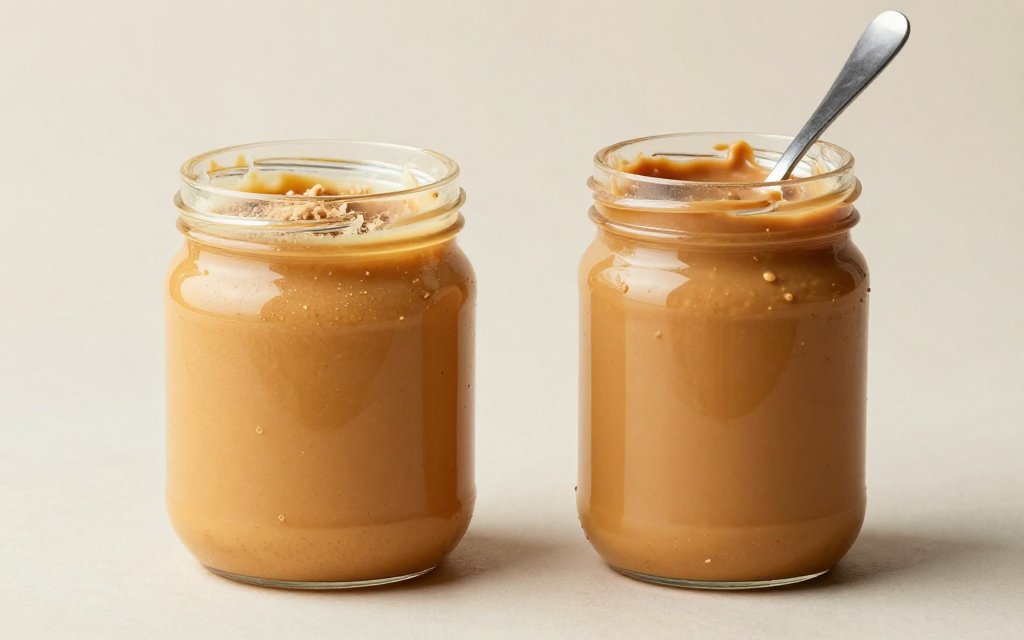
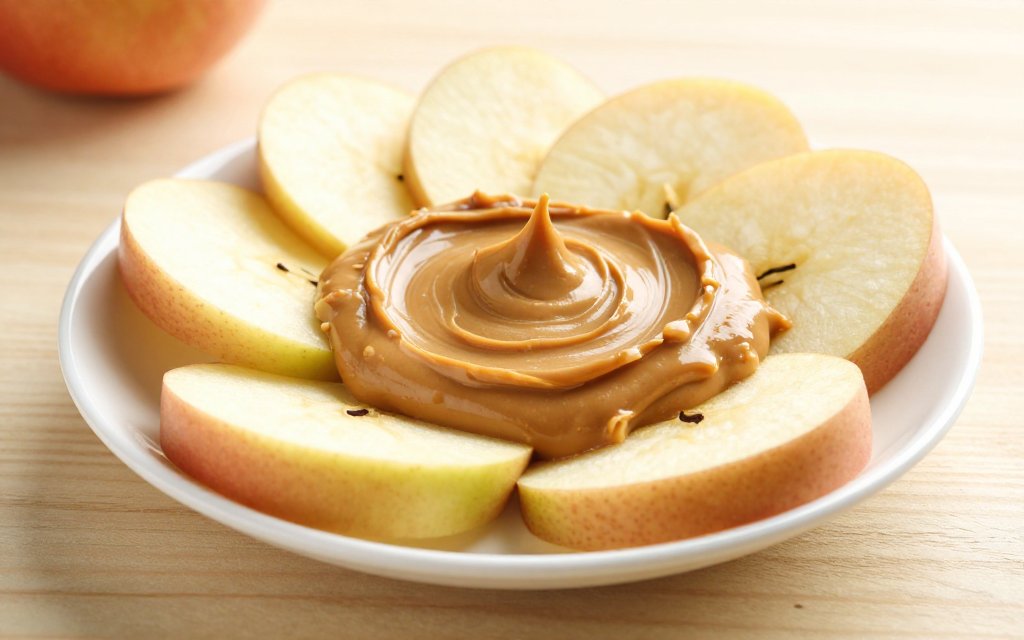
Peanuts are calorie dense, yet people who eat them regularly tend not to gain weight, because a small serving is so filling.
Frequently asked questions about peanut butter
How many calories in peanut butter per tablespoon?
One level tablespoon of regular peanut butter is about 94 calories. The full label serving of two tablespoons is roughly 188 calories, so the answer to how many calories in peanut butter really depends on the size of your scoop. Weigh it in grams if you want the exact number.
Is peanut butter good for weight loss?
Yes, as long as it fits your calorie budget. The protein and healthy fat help you feel full on a small portion, and peanuts aren't linked to weight gain when eaten in normal amounts. The trick is portion control, since the calories climb quickly once you go past two tablespoons.
How many calories are in a peanut butter and jelly sandwich?
It adds up well beyond the spread. Two tablespoons of peanut butter alone are about 188 calories, then two slices of bread and a spoon of jam pile on more. Log each part so the peanut butter and jelly calories don't sneak past your daily total.
Peanut butter is worth keeping in your kitchen, you just have to log it honestly. Start tracking your nutrition today and let CalMeal take the guesswork out of it, snapping a photo to estimate the peanut butter calories in your scoop and the rest of your plate. Get the app here: iOS or Android.
Start Tracking Your Nutrition Today
Download CalMeal for free and take the guesswork out of calorie counting with AI-powered food recognition.

